The Next.js eCommerce template that already works
3 handcrafted storefronts on 1 typed data layer. Cart, checkout, accounts, and order tracking run end to end on the demo data. Keep the store you need, connect your backend, and ship.
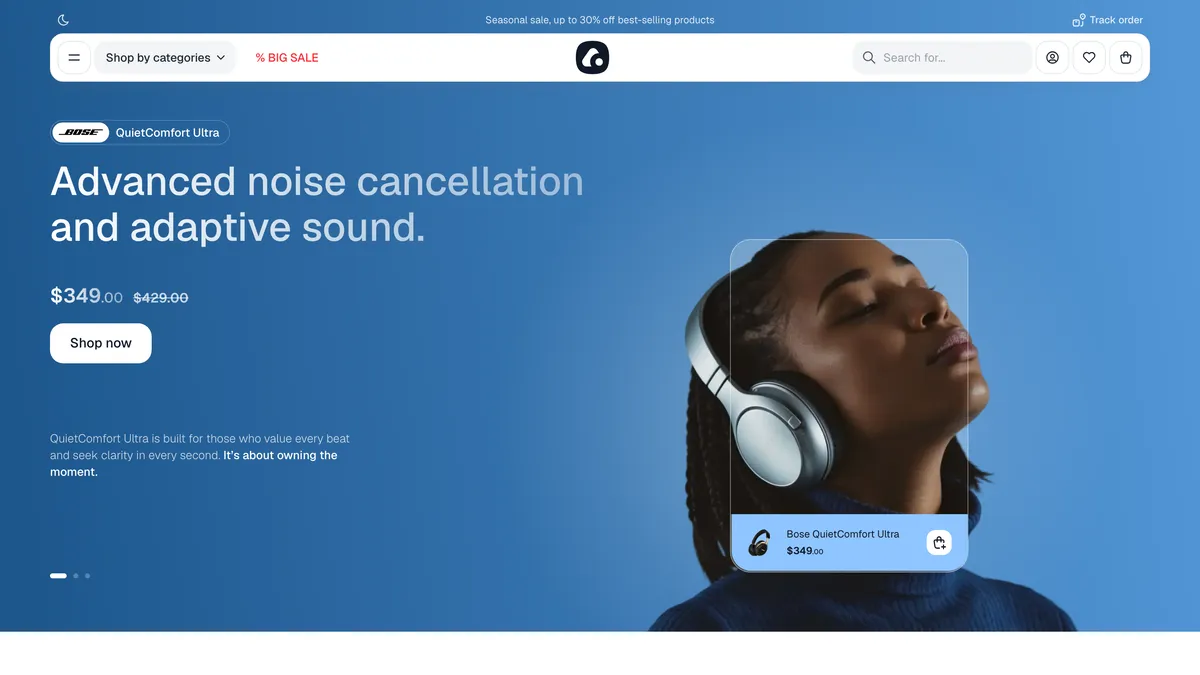
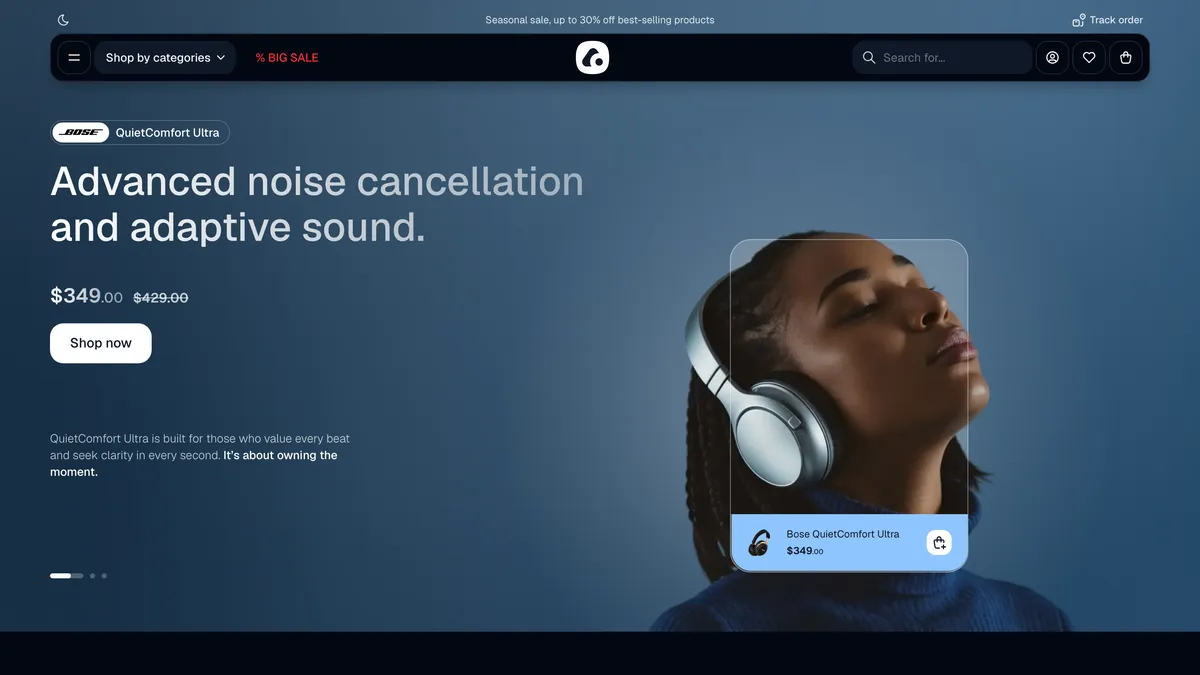
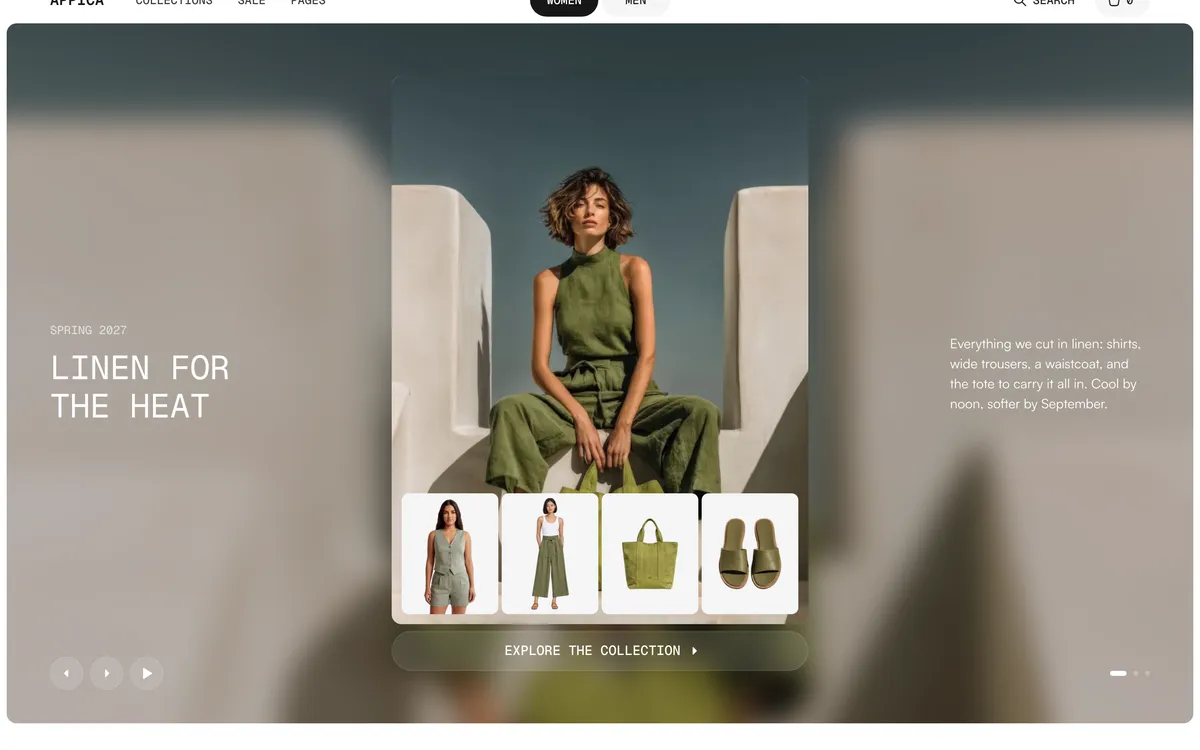
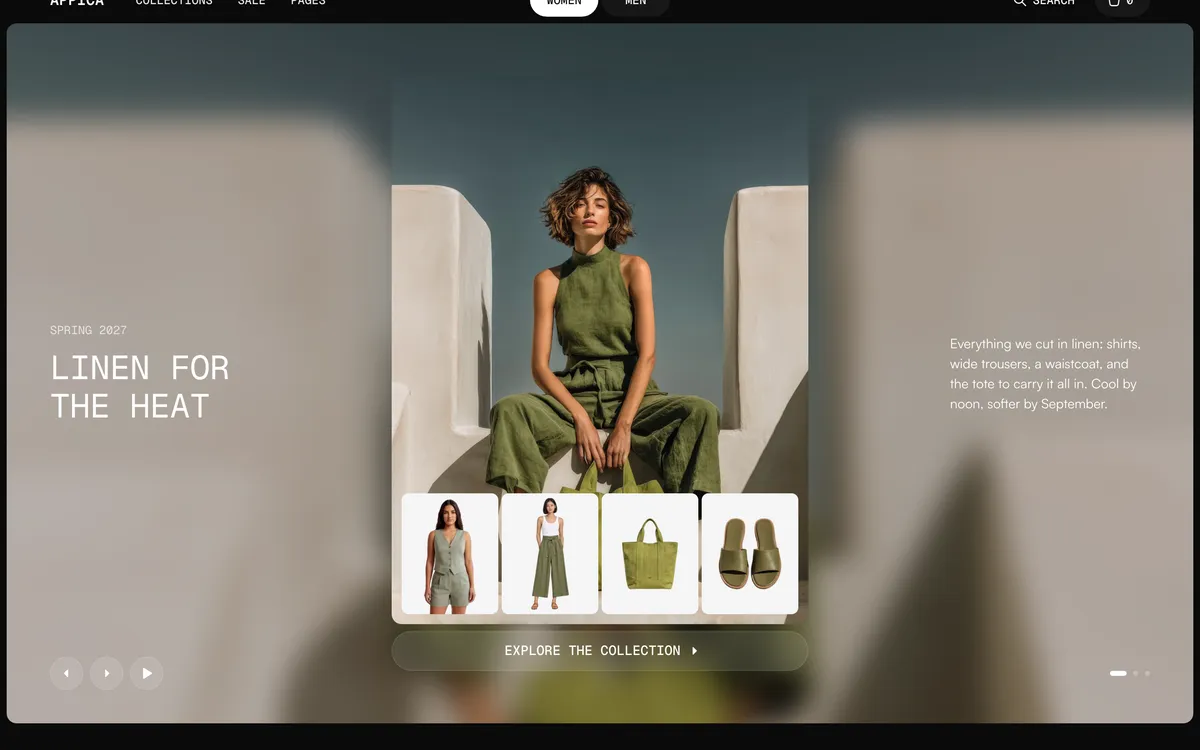
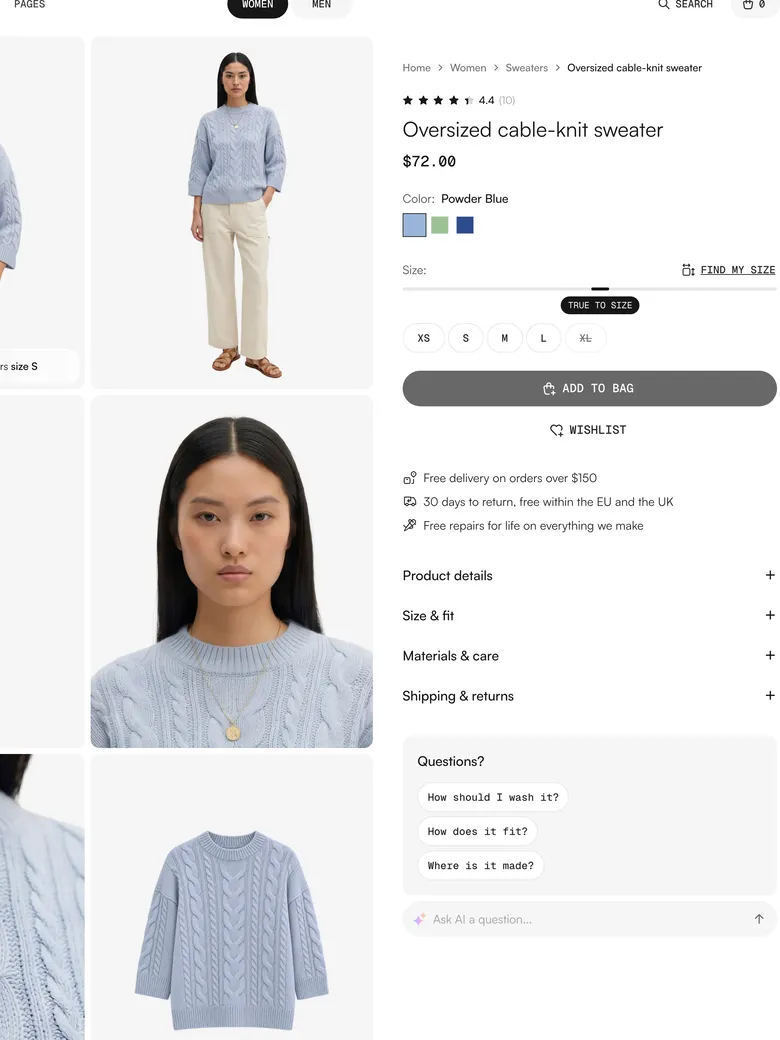
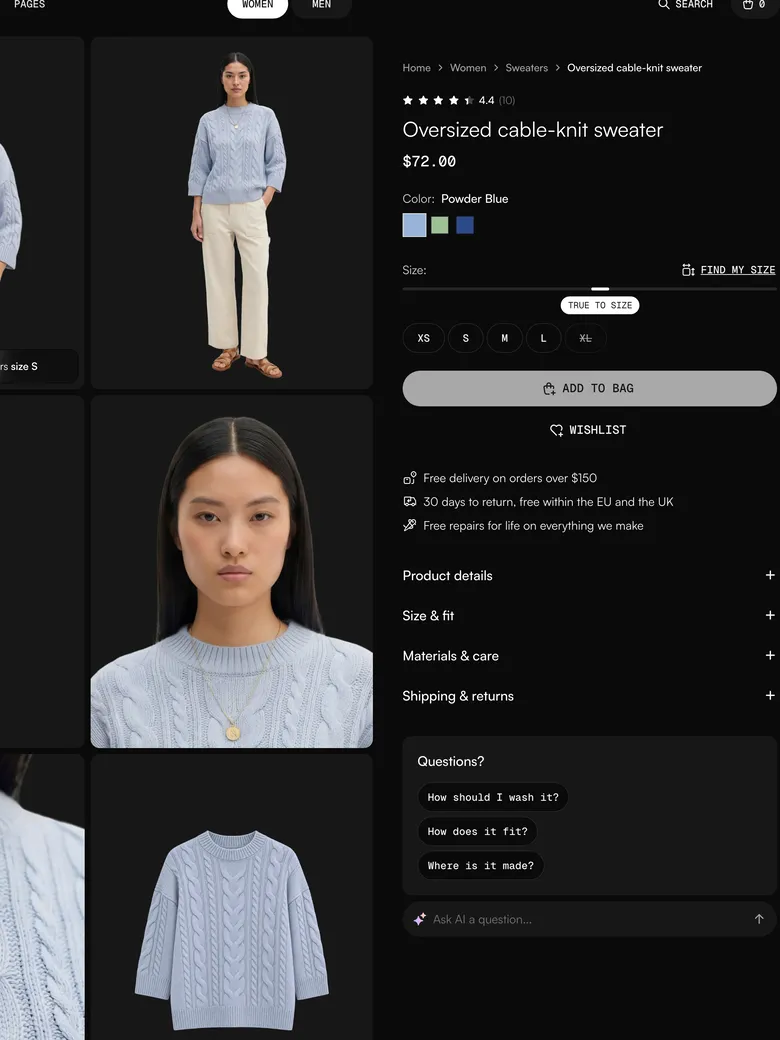
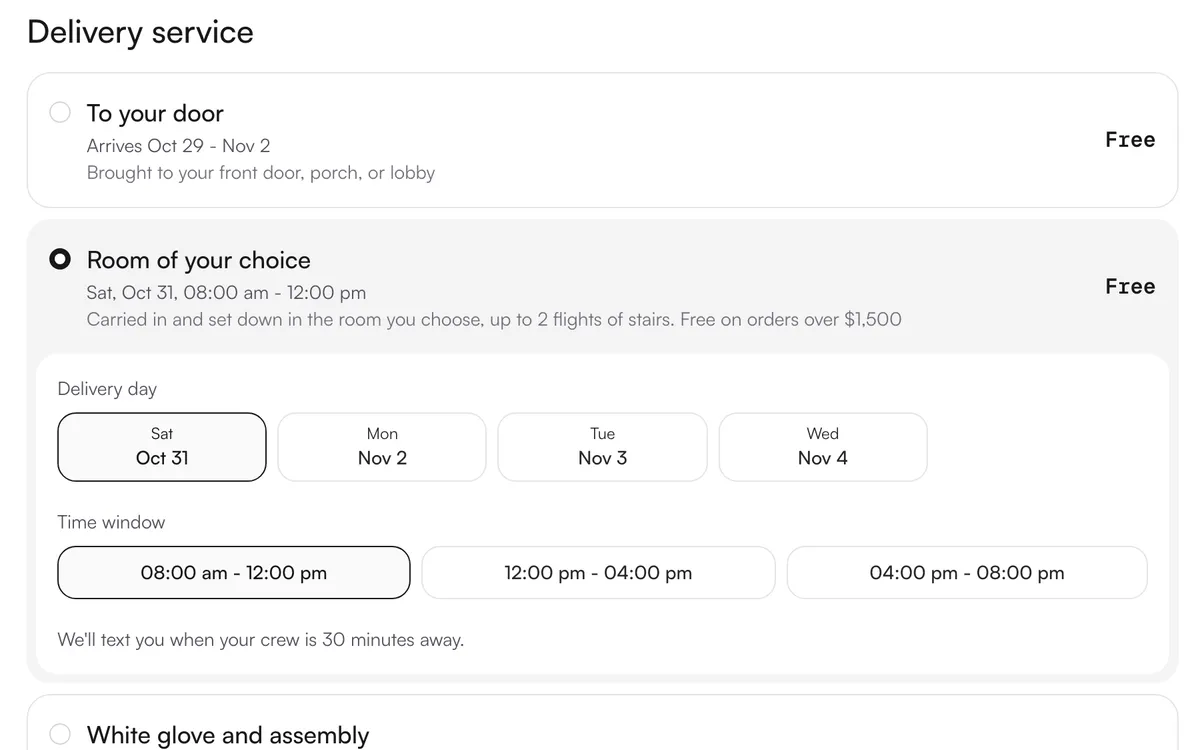
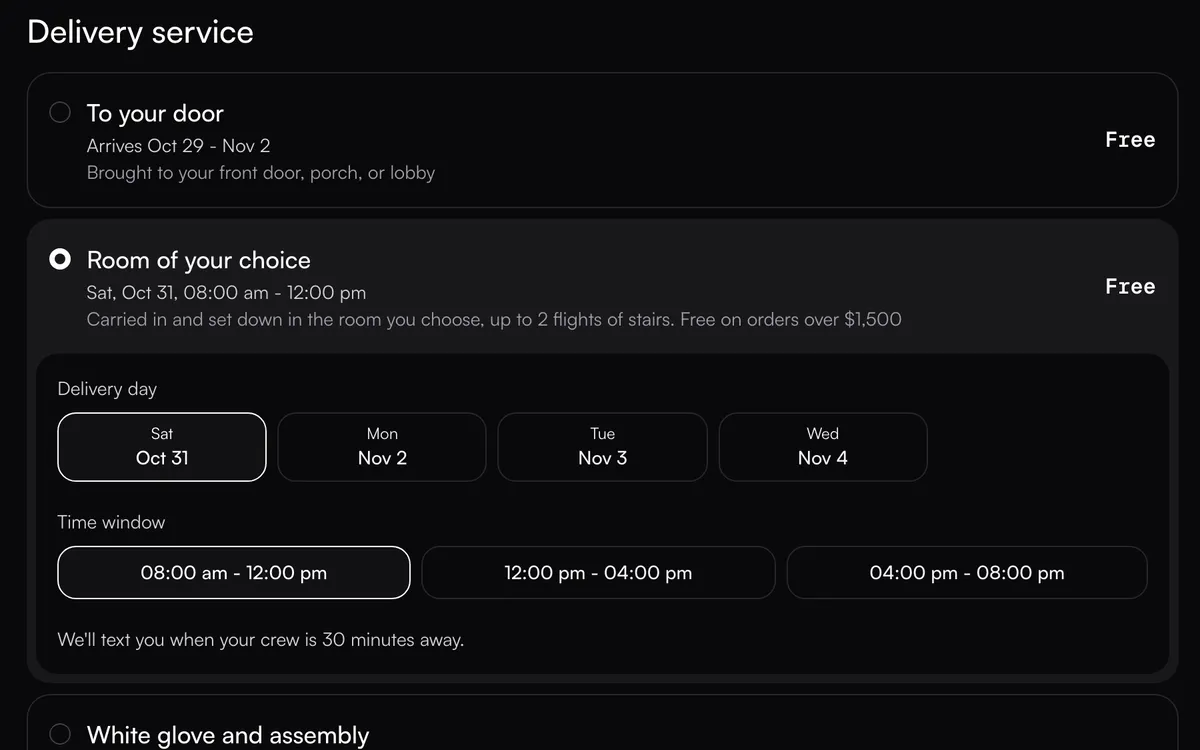
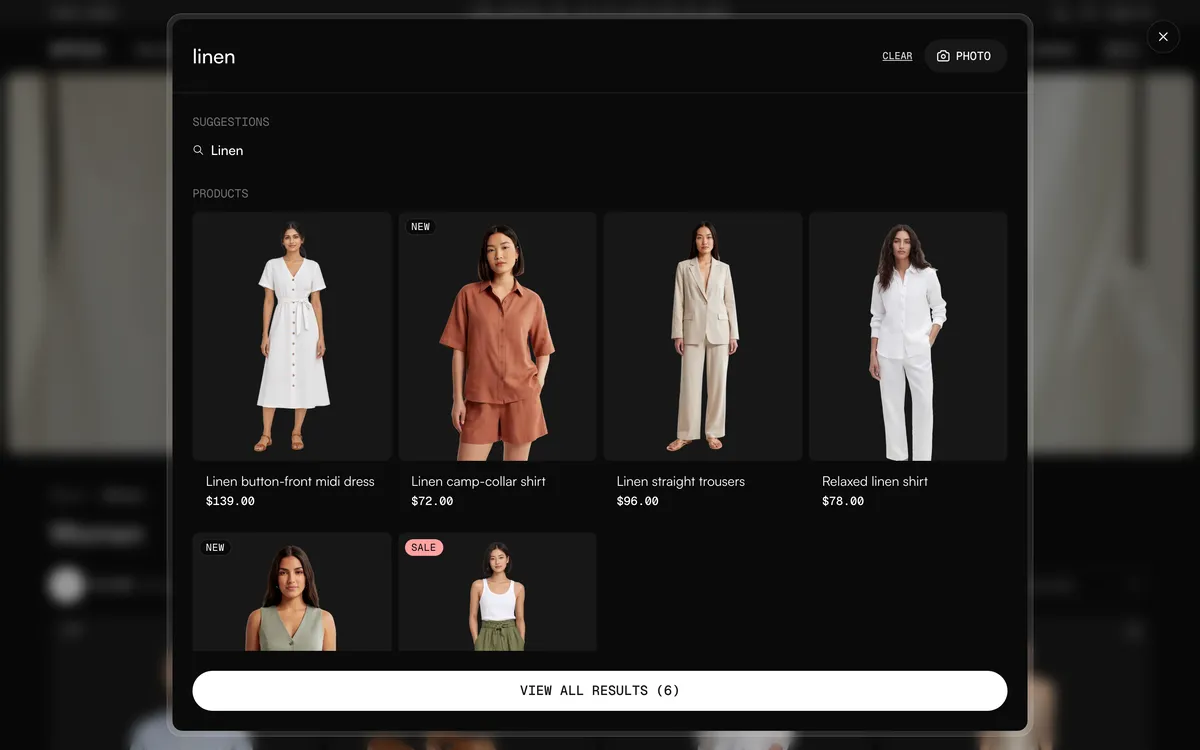
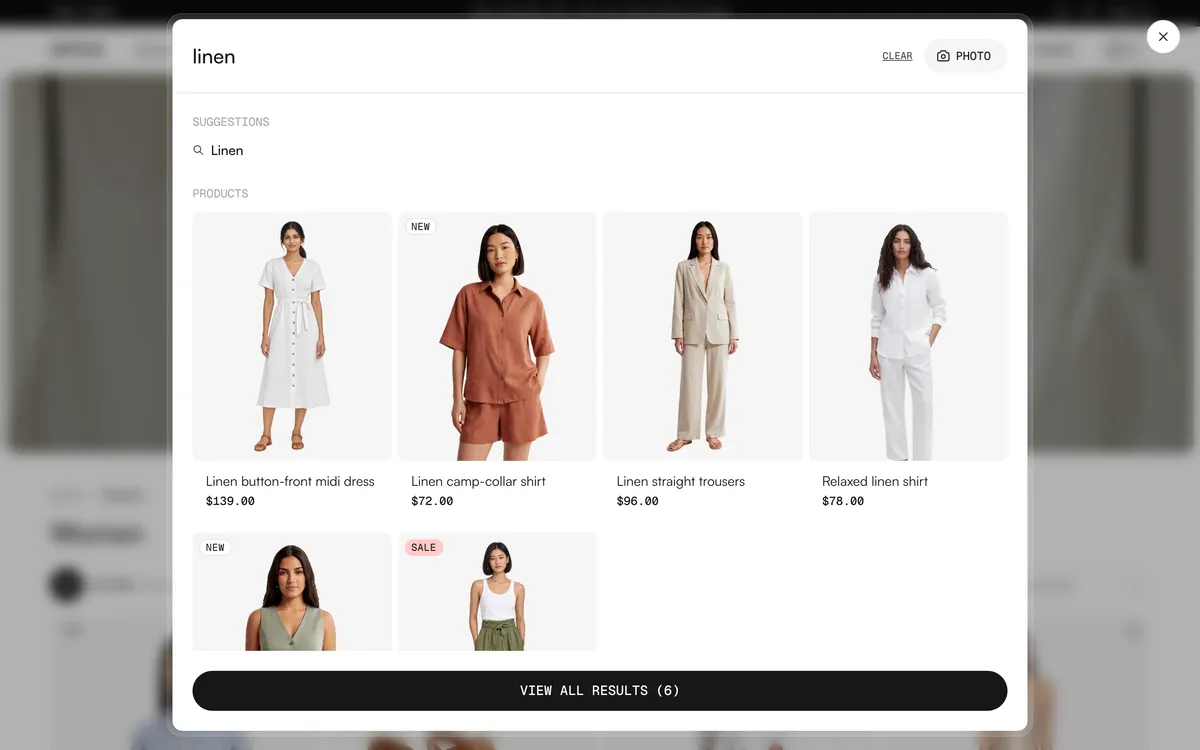


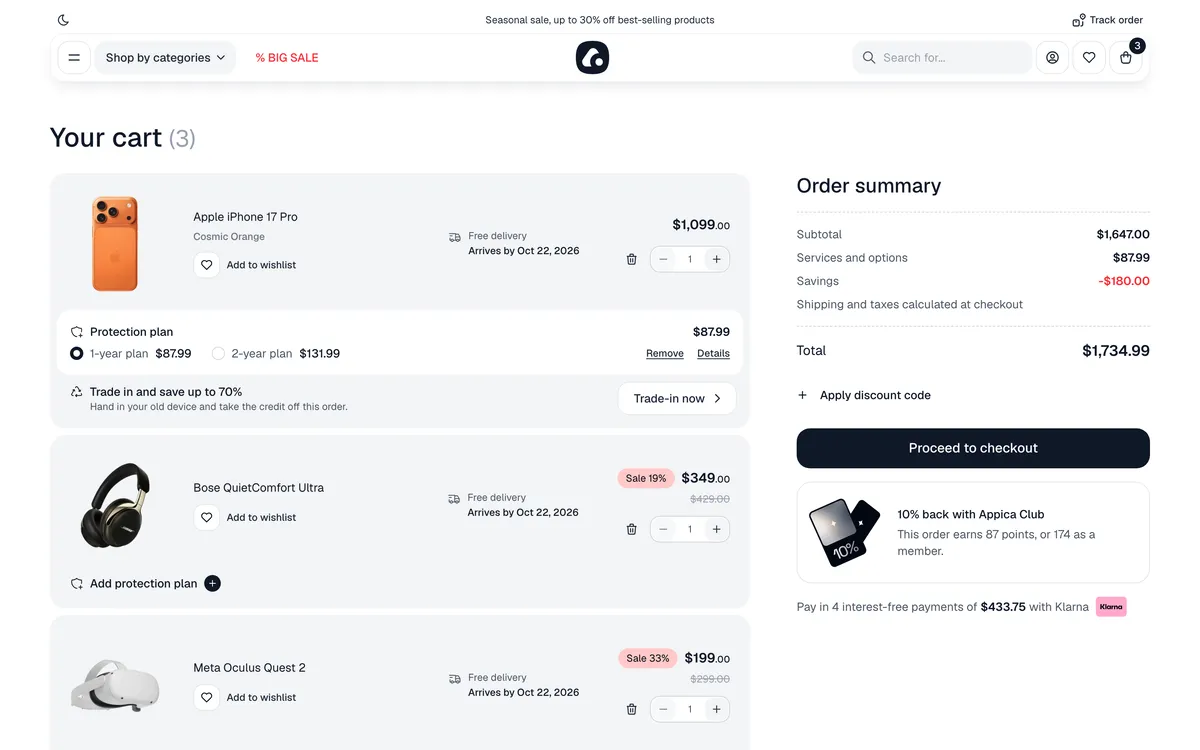
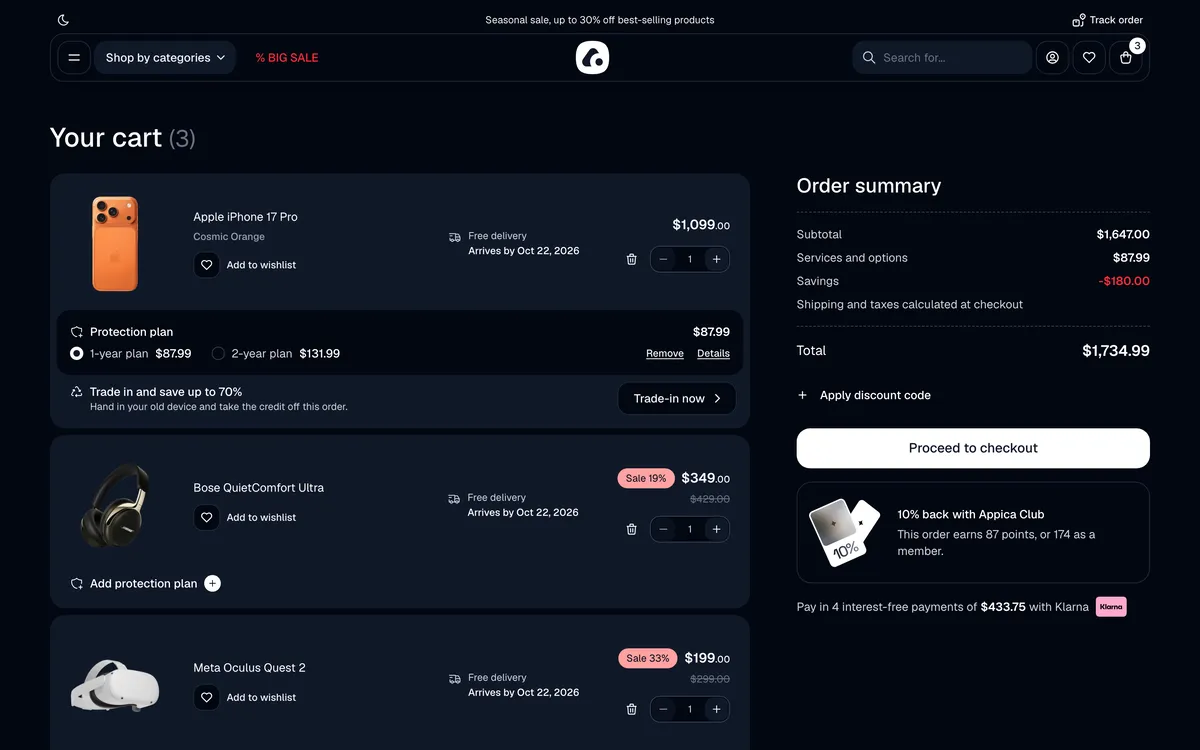
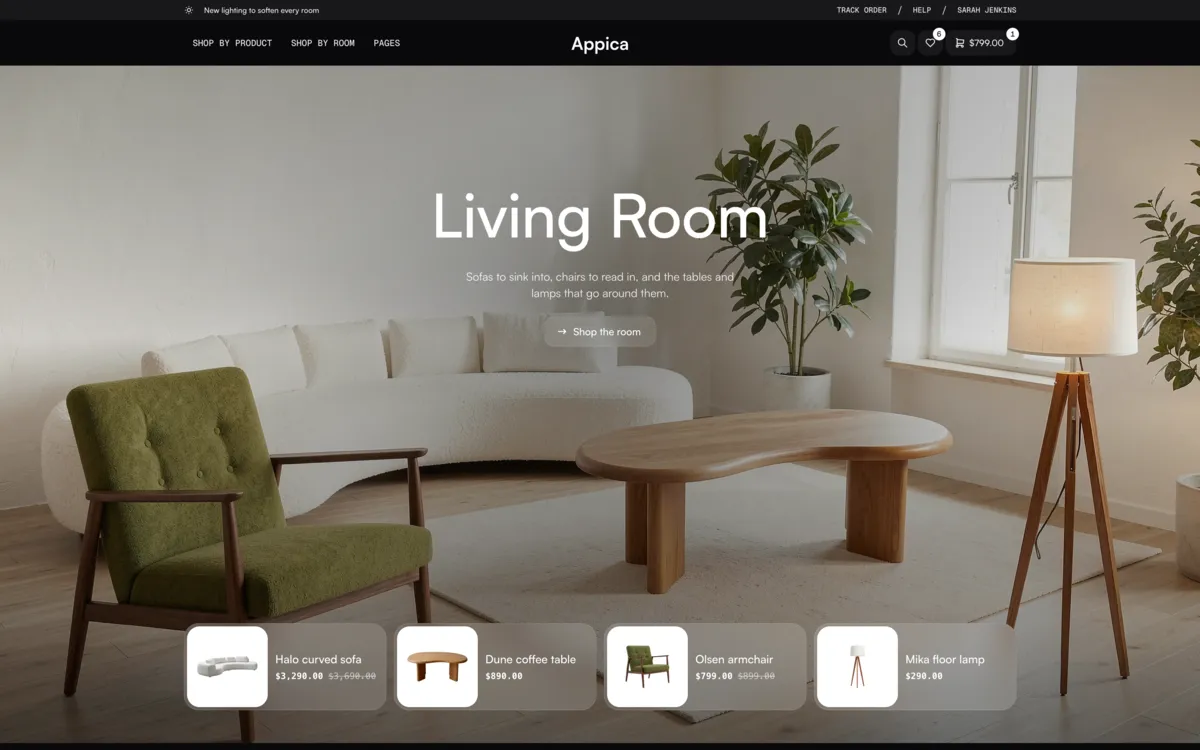
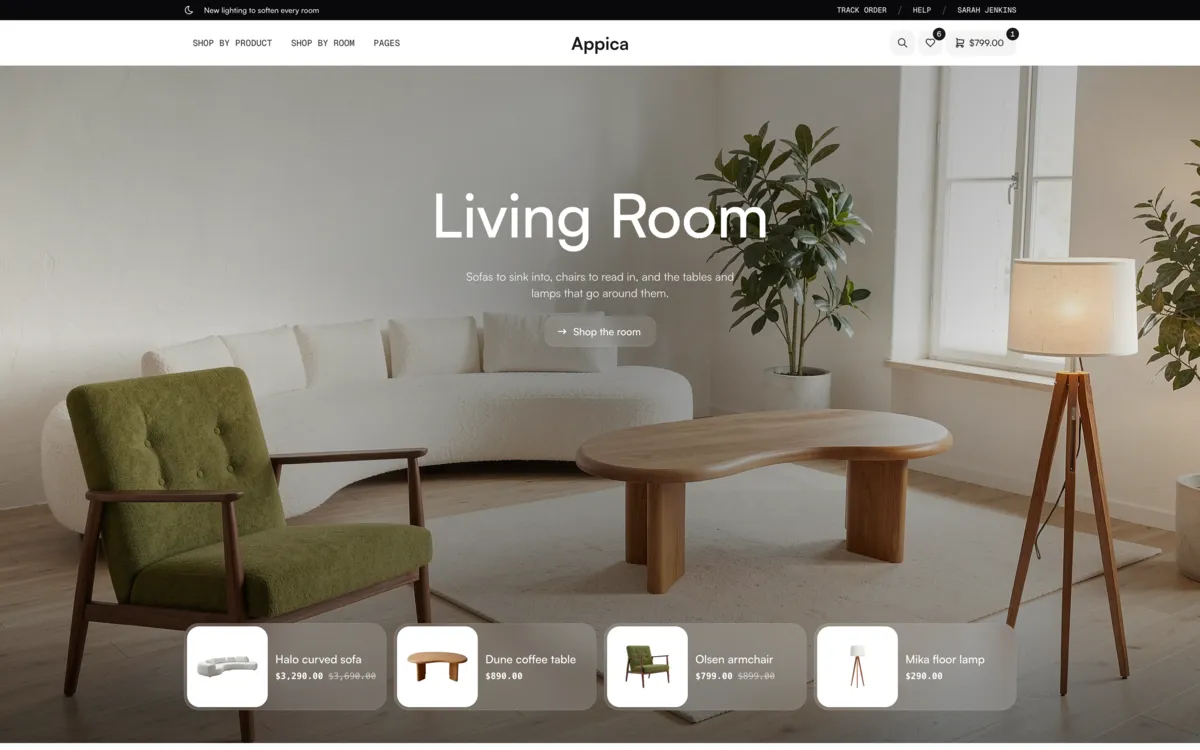
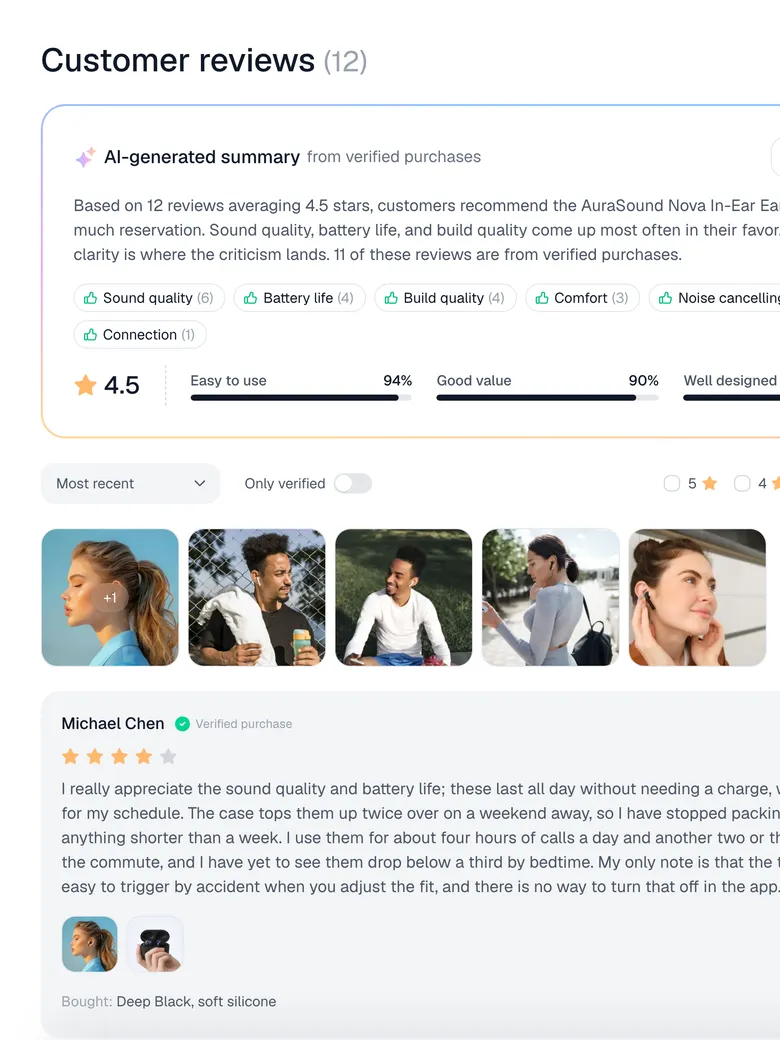
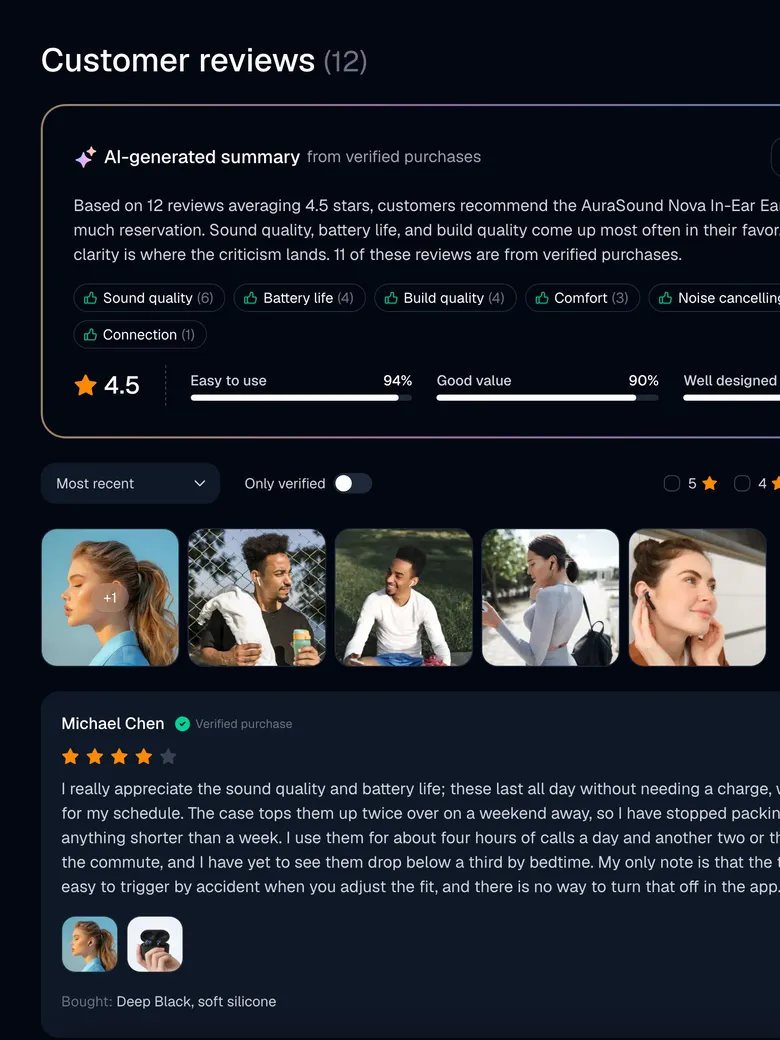
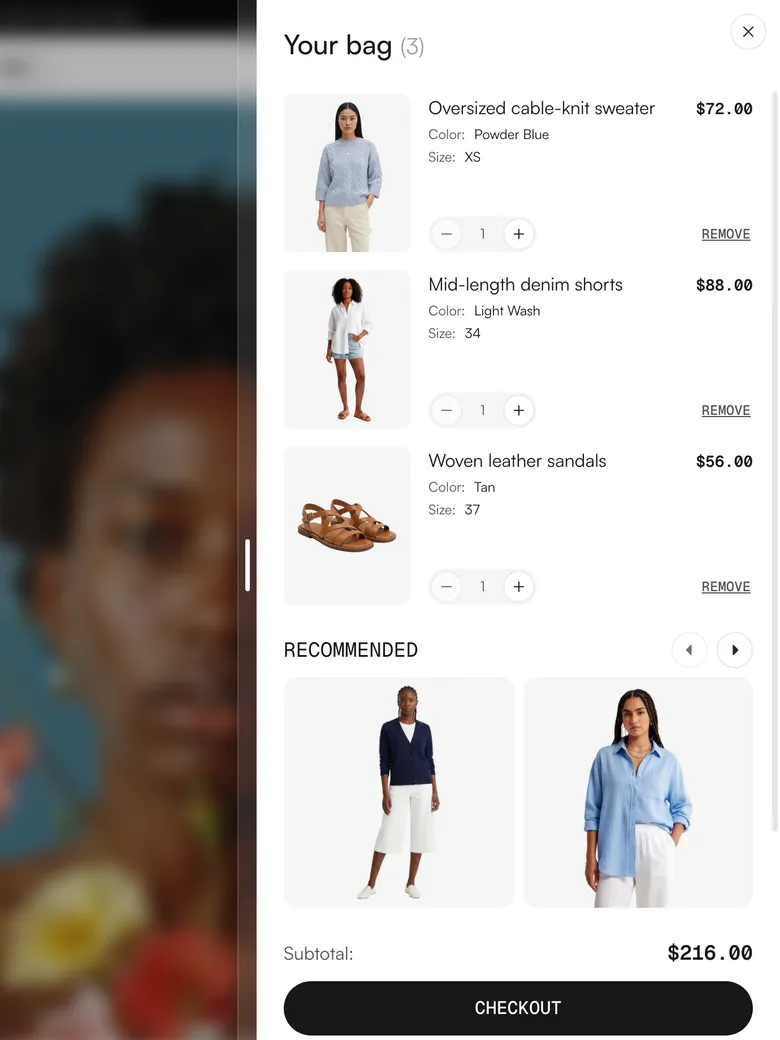
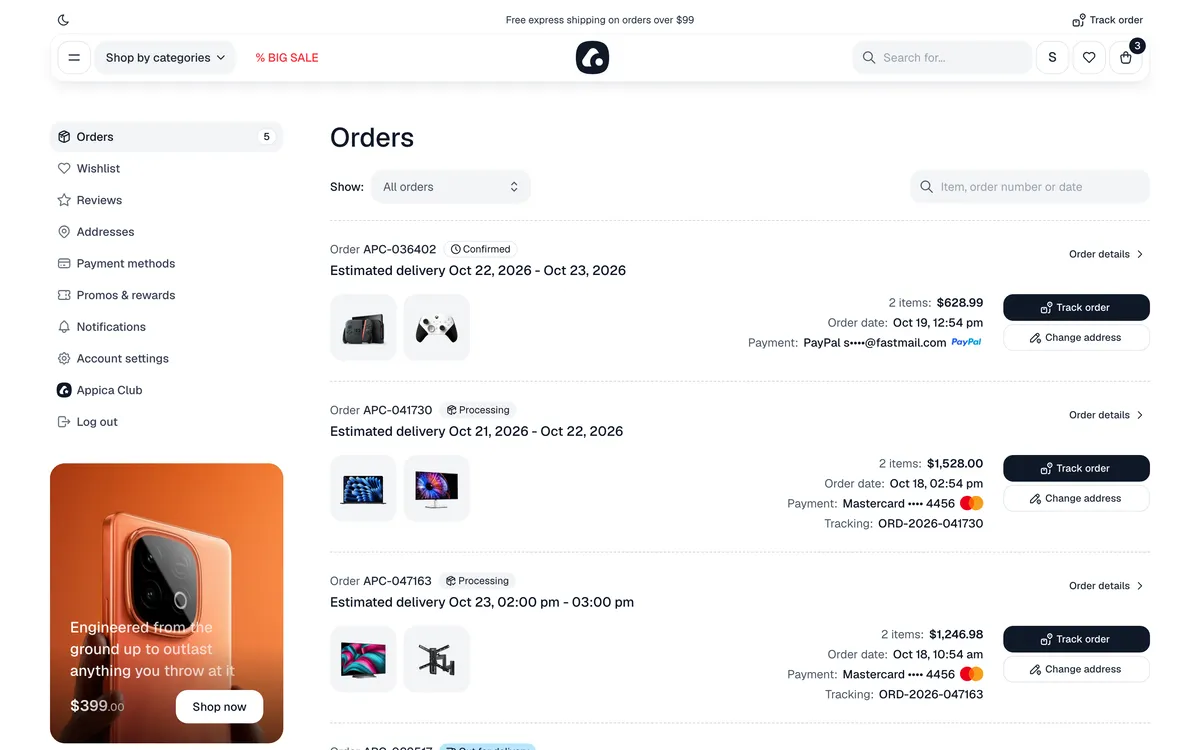
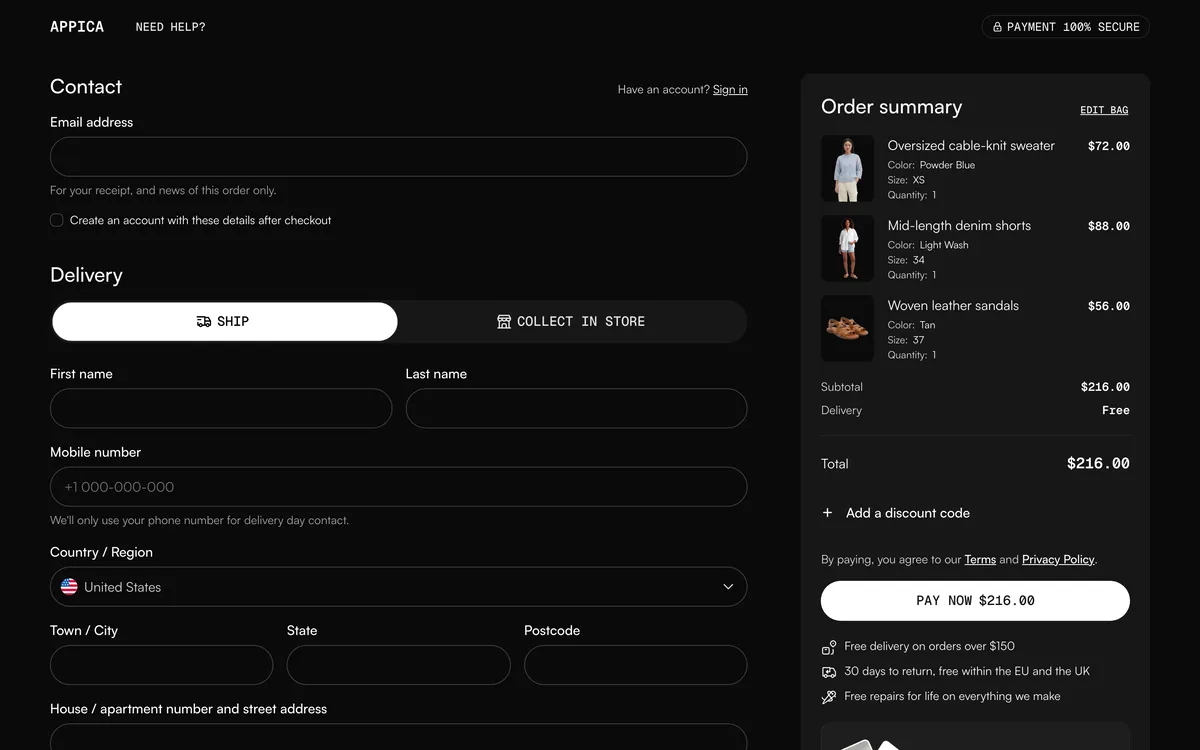
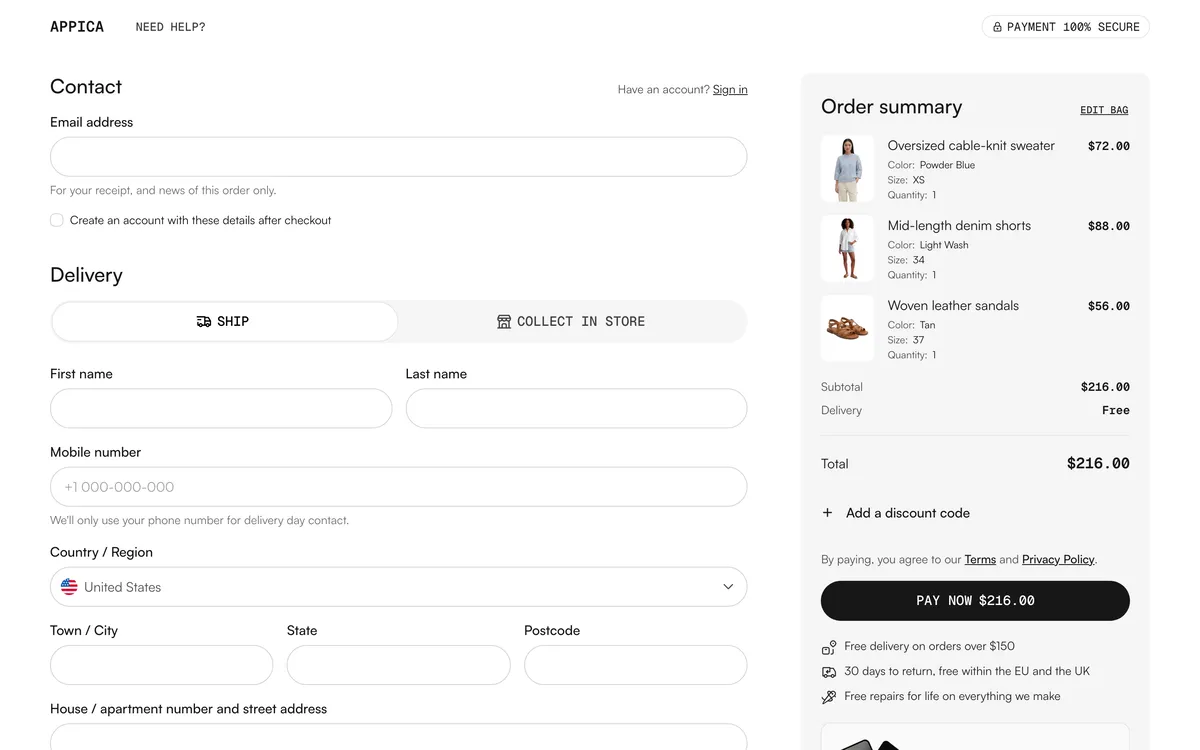
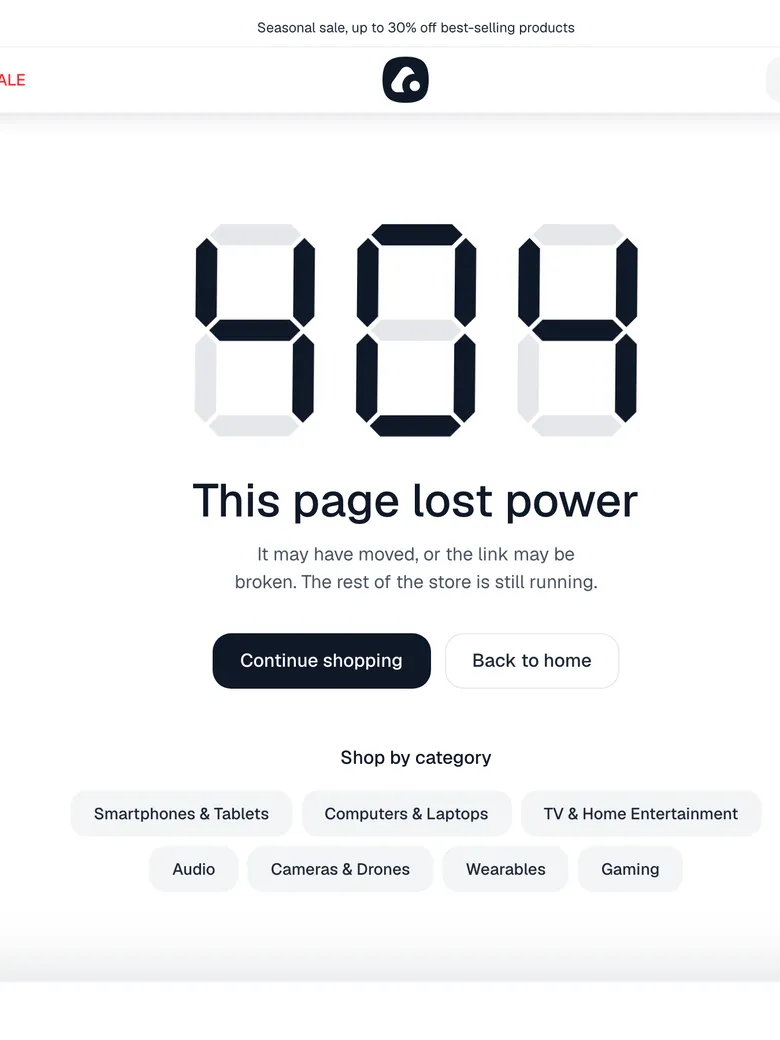
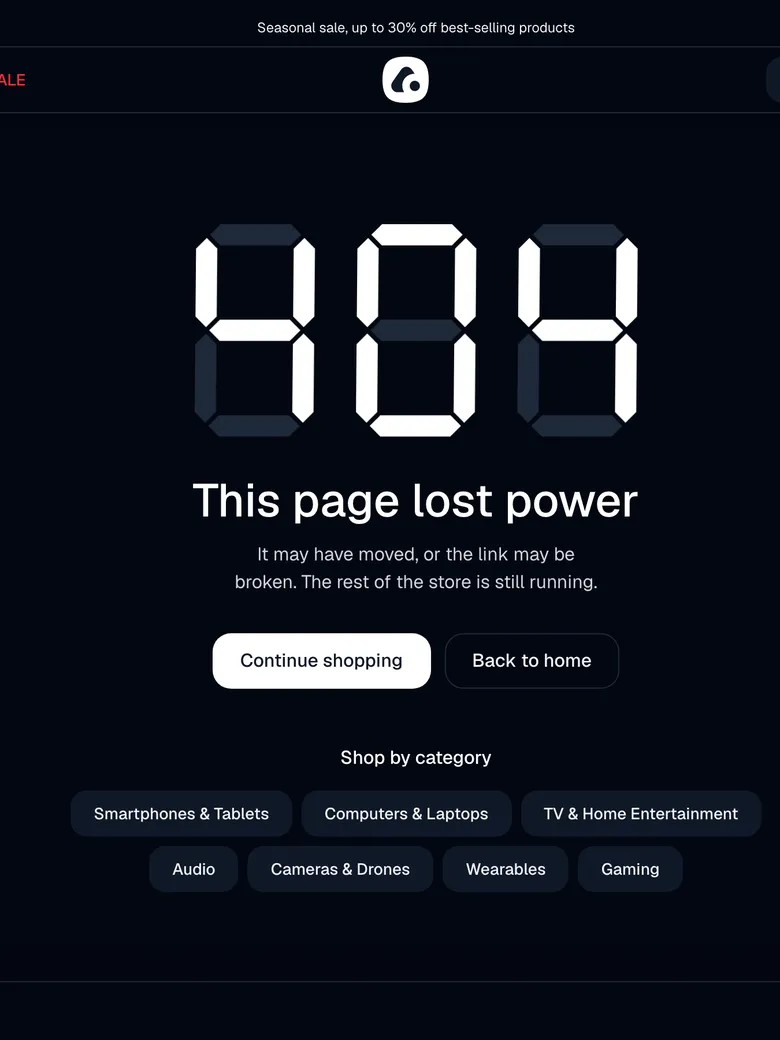
3 storefronts92 pages204 demo products74 UI components37 Server Actions
3 handcrafted storefronts
Each demo is a whole store in 1 folder, from the home page to the legal pages, designed for its niche rather than reskinned. Pick the one closest to yours; 1 command removes the rest and serves it at /.
pnpm install
pnpm use-demo fashion
This keeps Fashion and serves it at /.
Reducing...
Checking...
ok Route types
ok Type-check
ok Lint
Fashion is the only store now, served at /.
- Deletes the other demos, the landing page, and the showcase menus
- Merges the store’s tokens into globals.css and serves it at /
- Type-checks, lints, and formats before it hands back
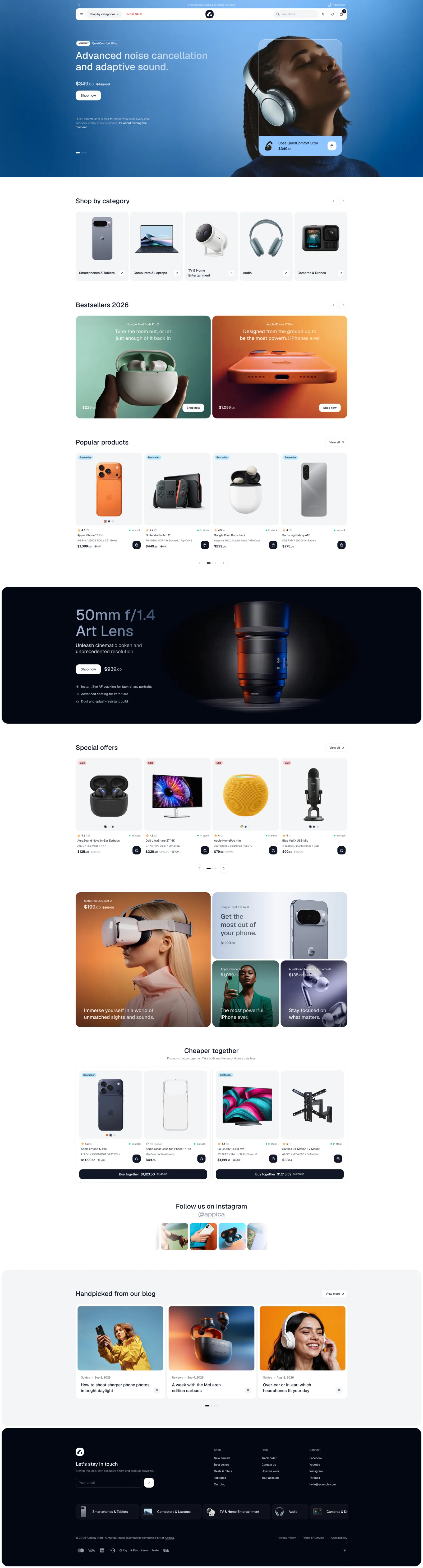
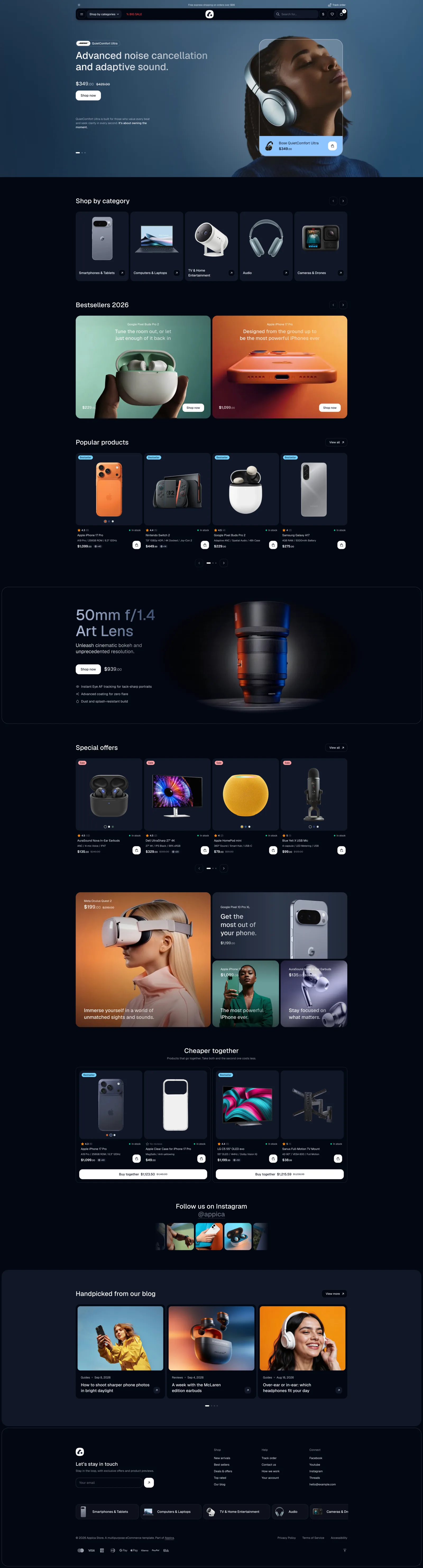
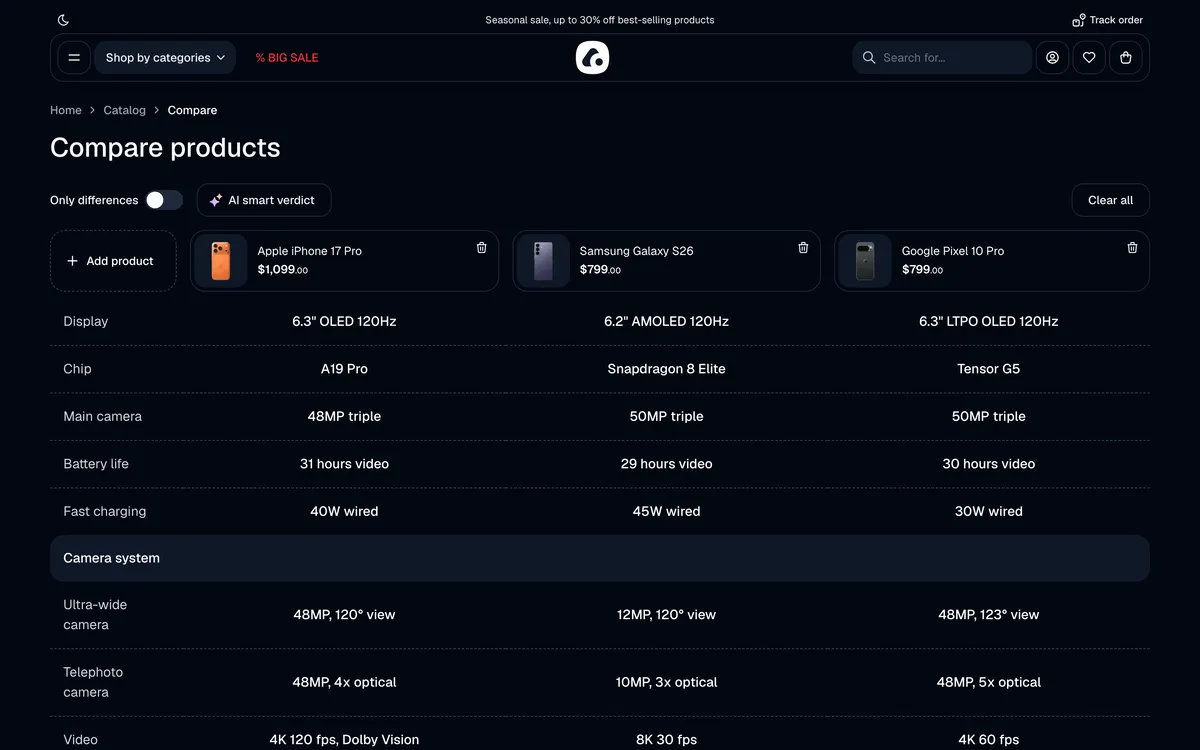
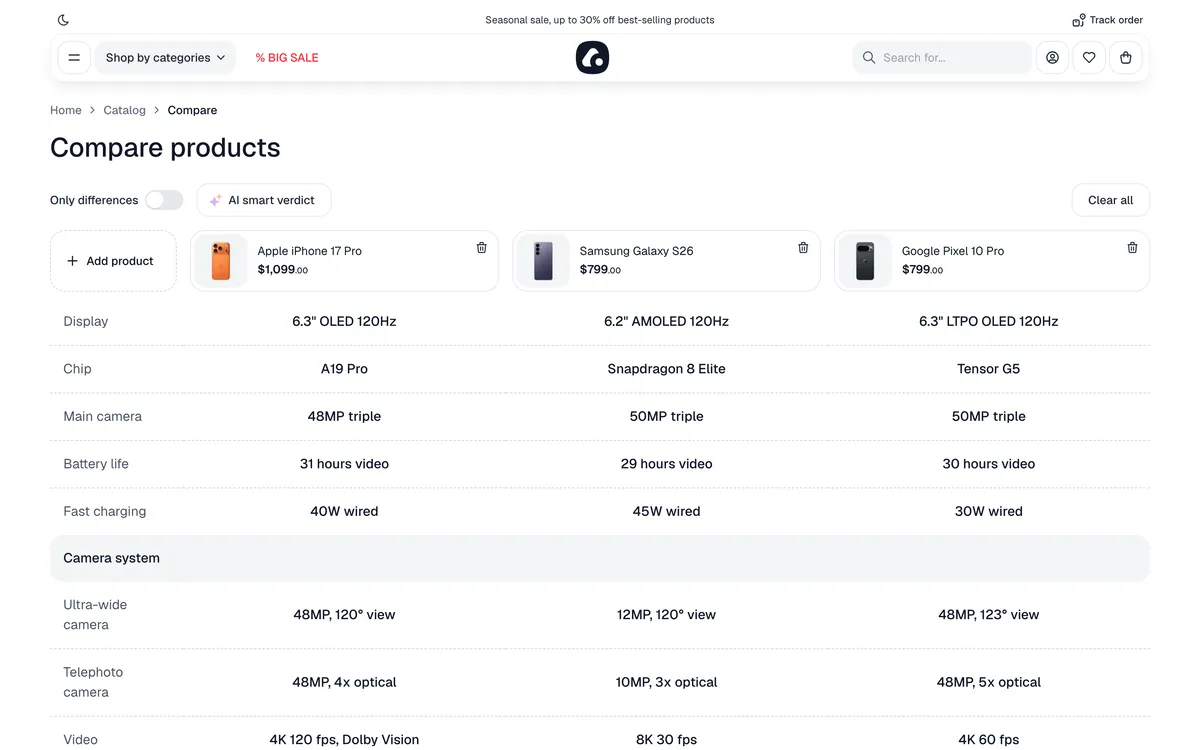
Electronics
Phones, laptops & gadgets, the base every other demo builds on.
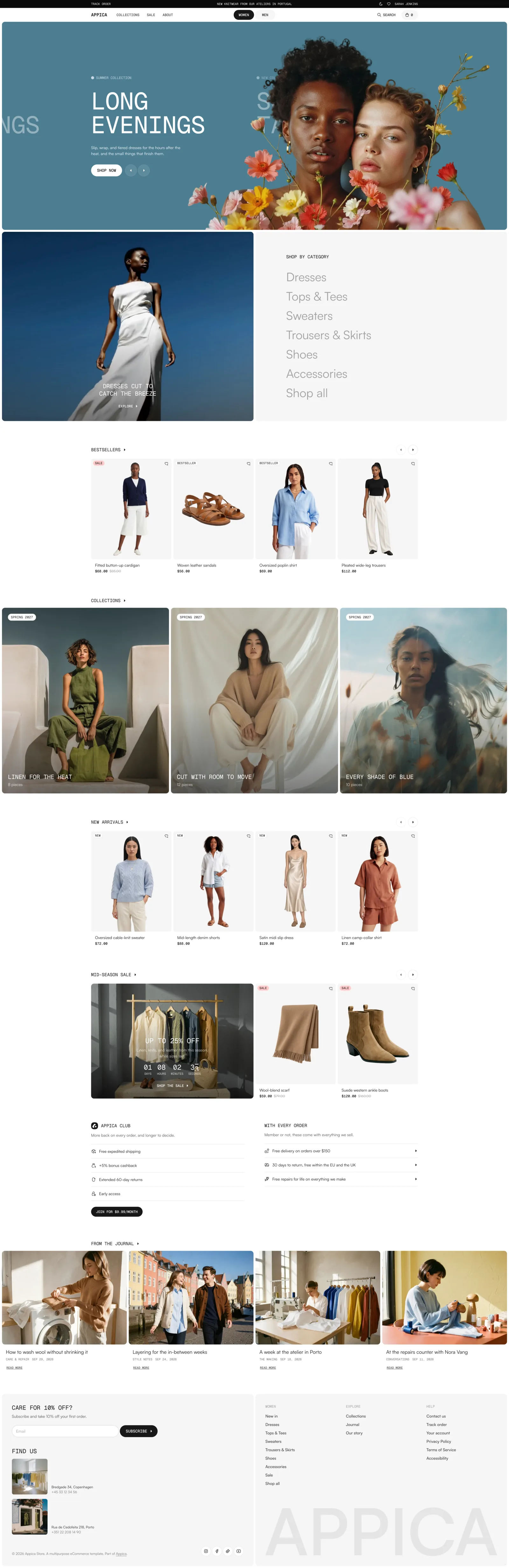
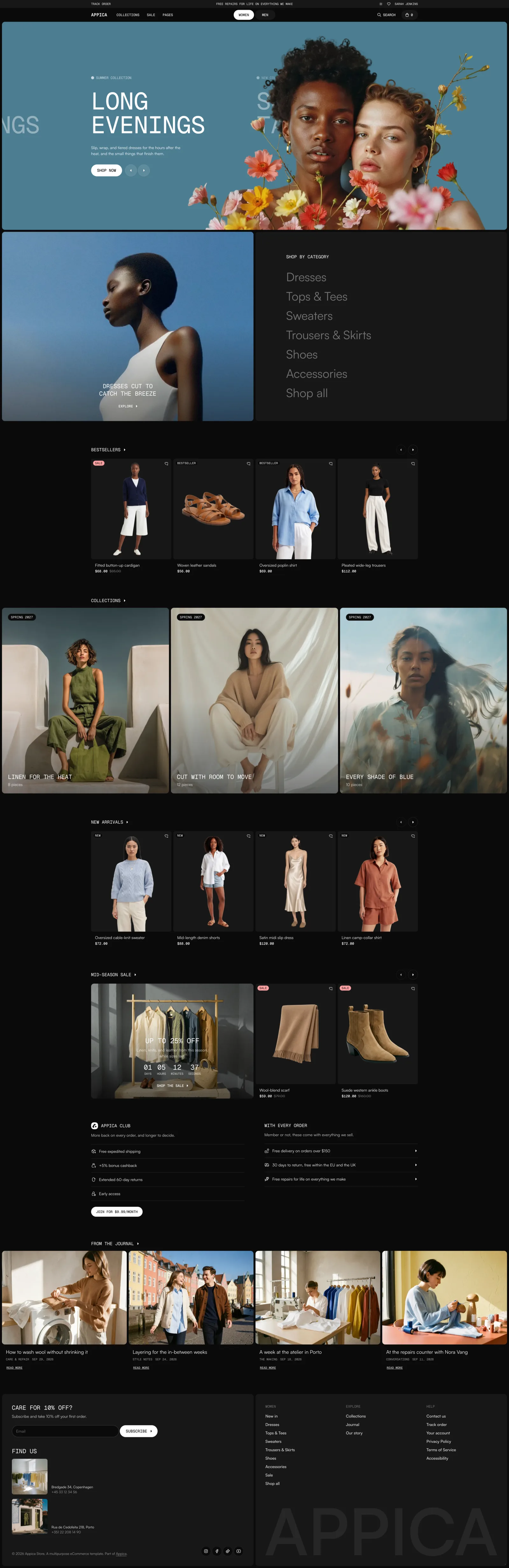
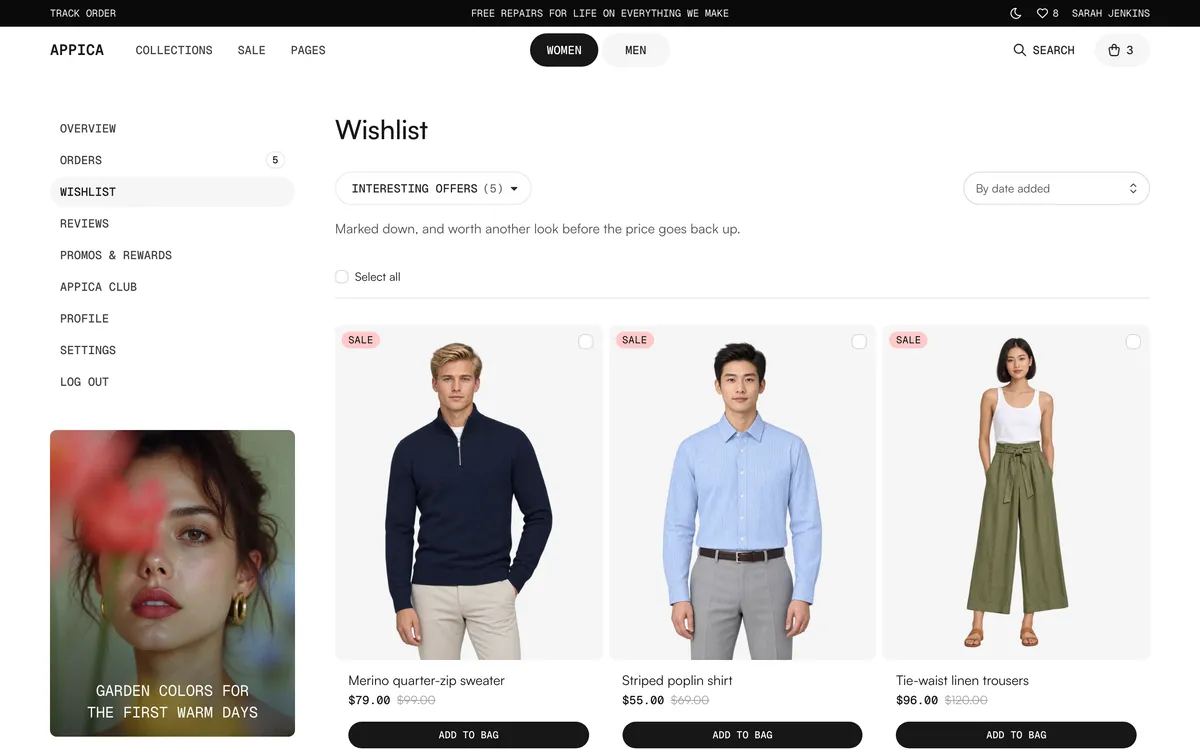
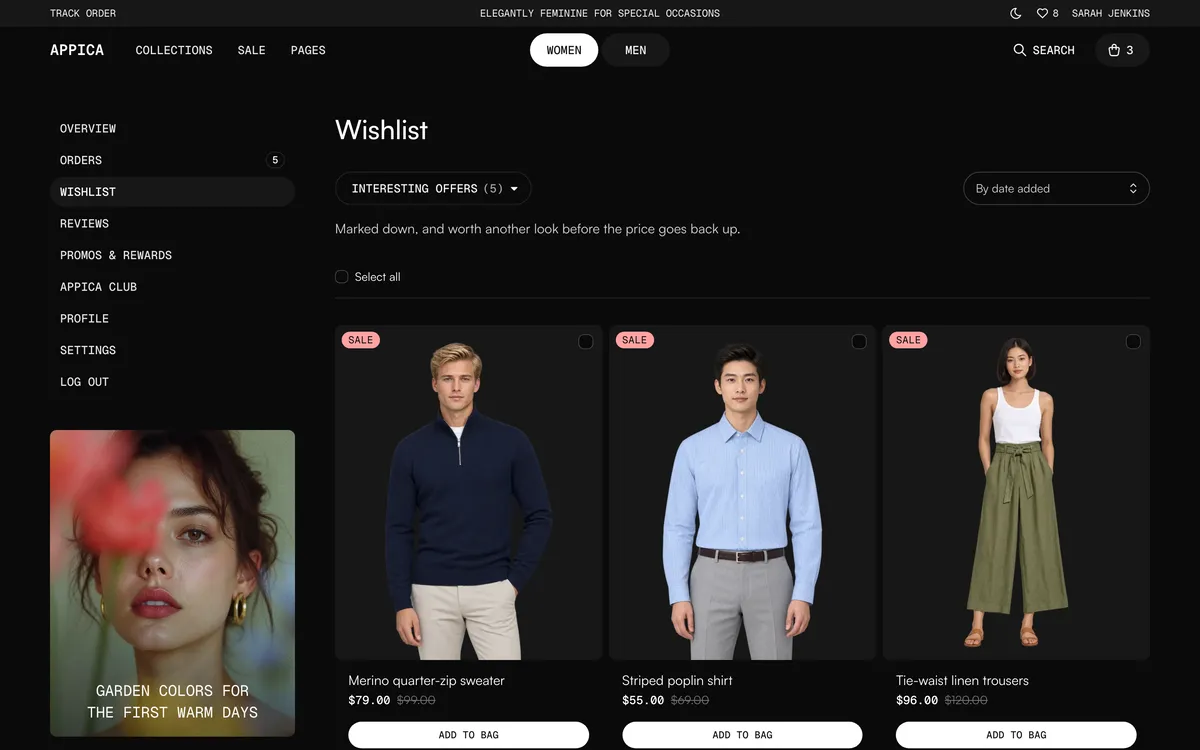
Fashion
Clothing, shoes, bags & accessories.
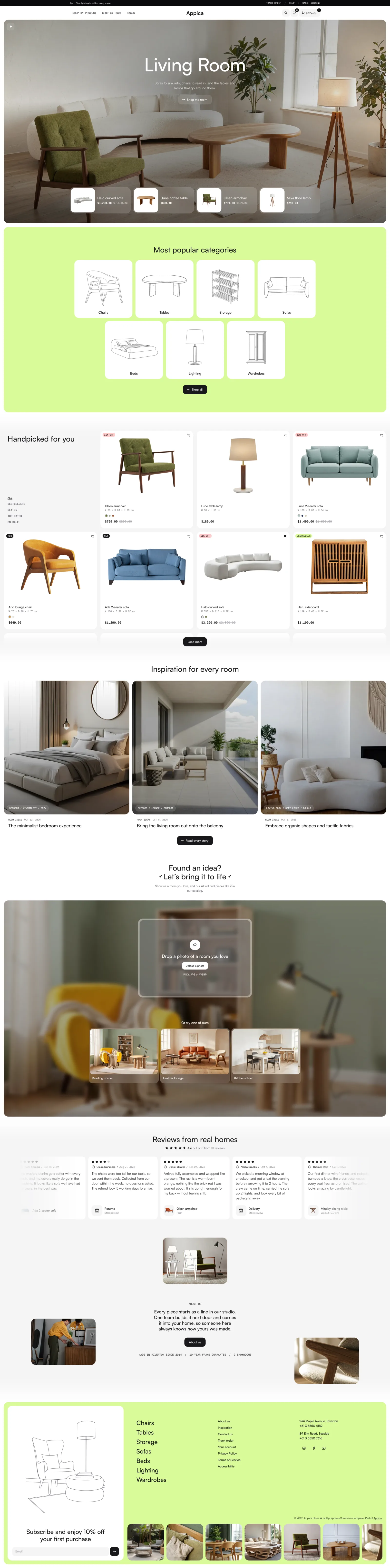
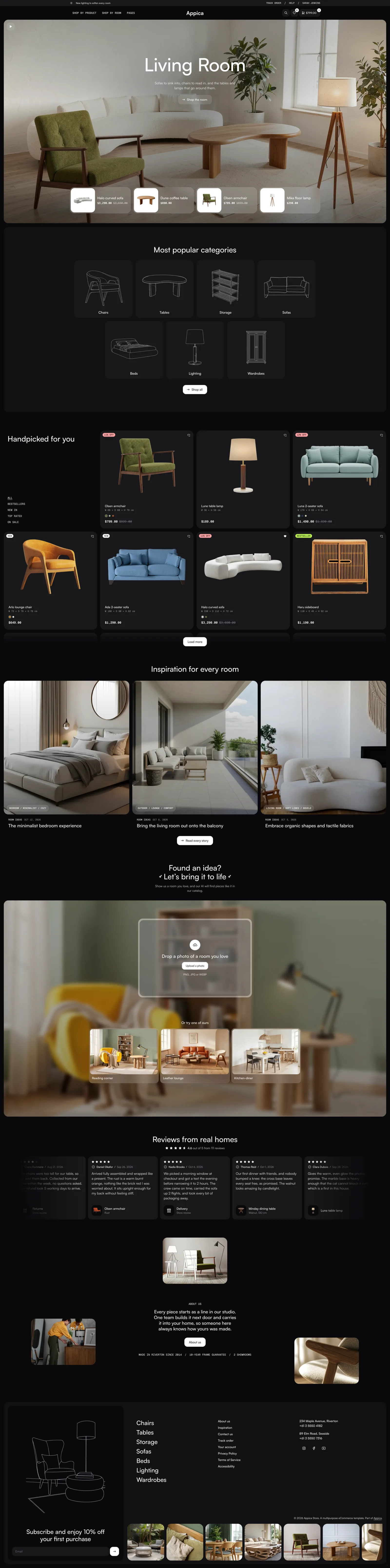
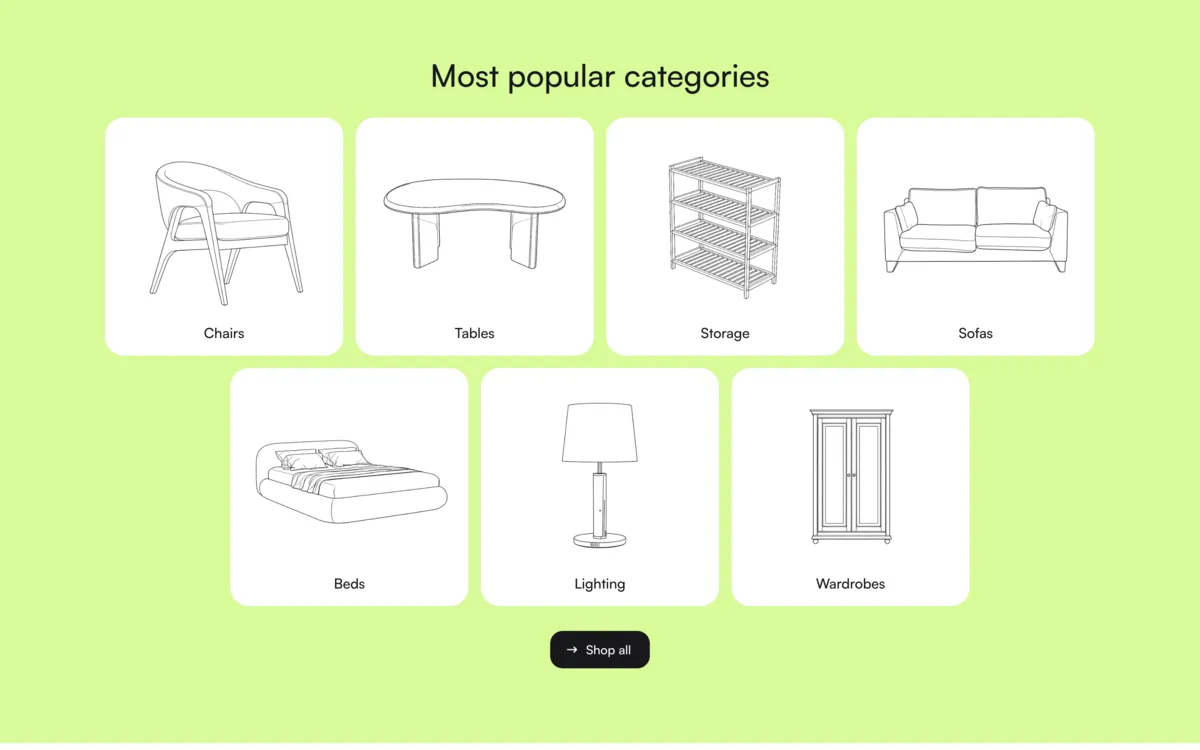
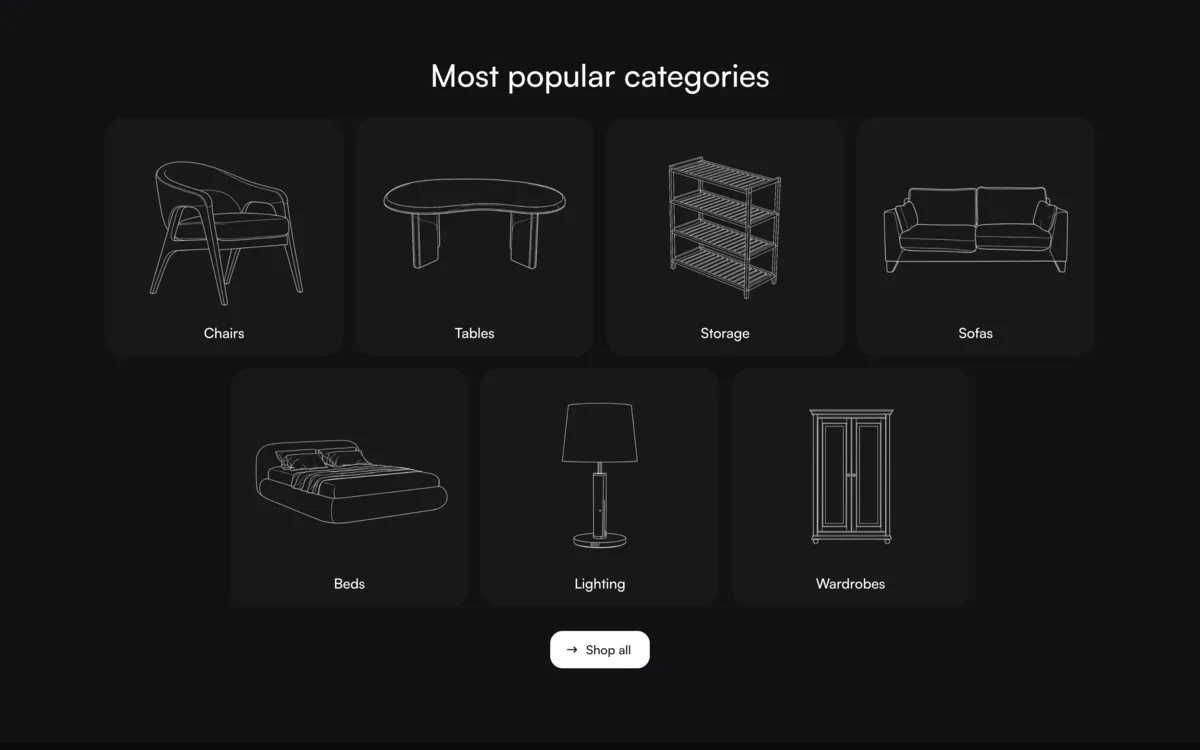
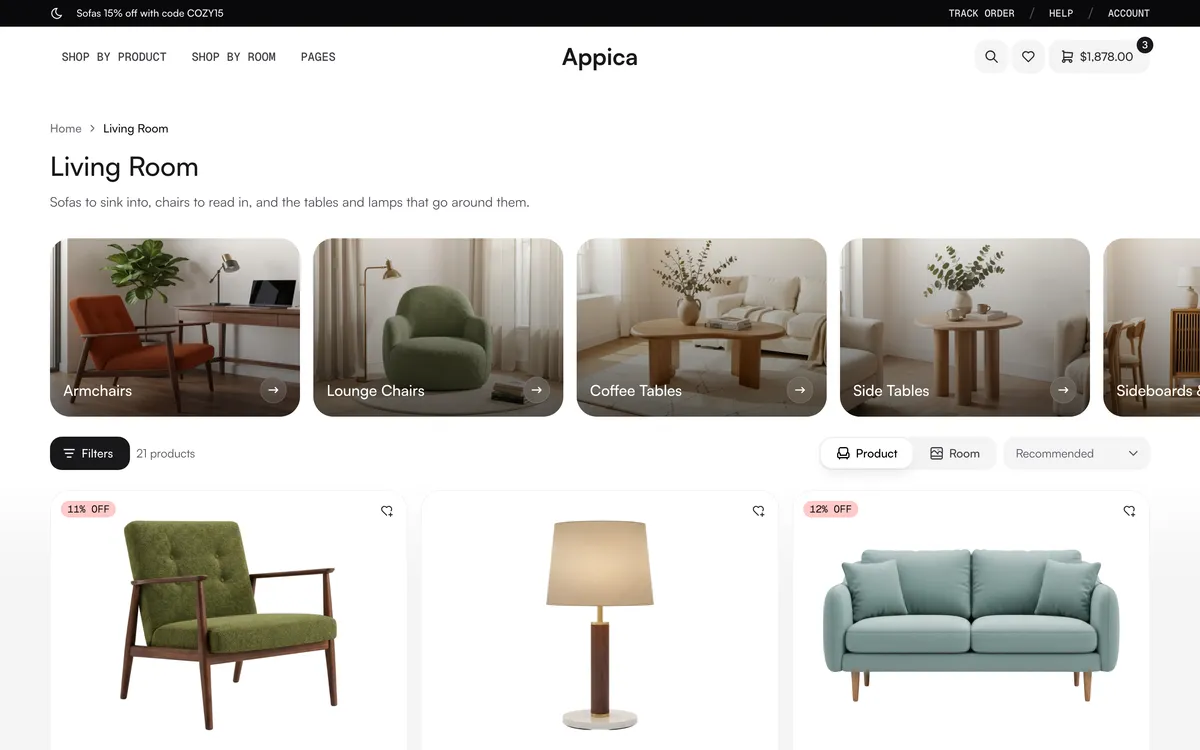
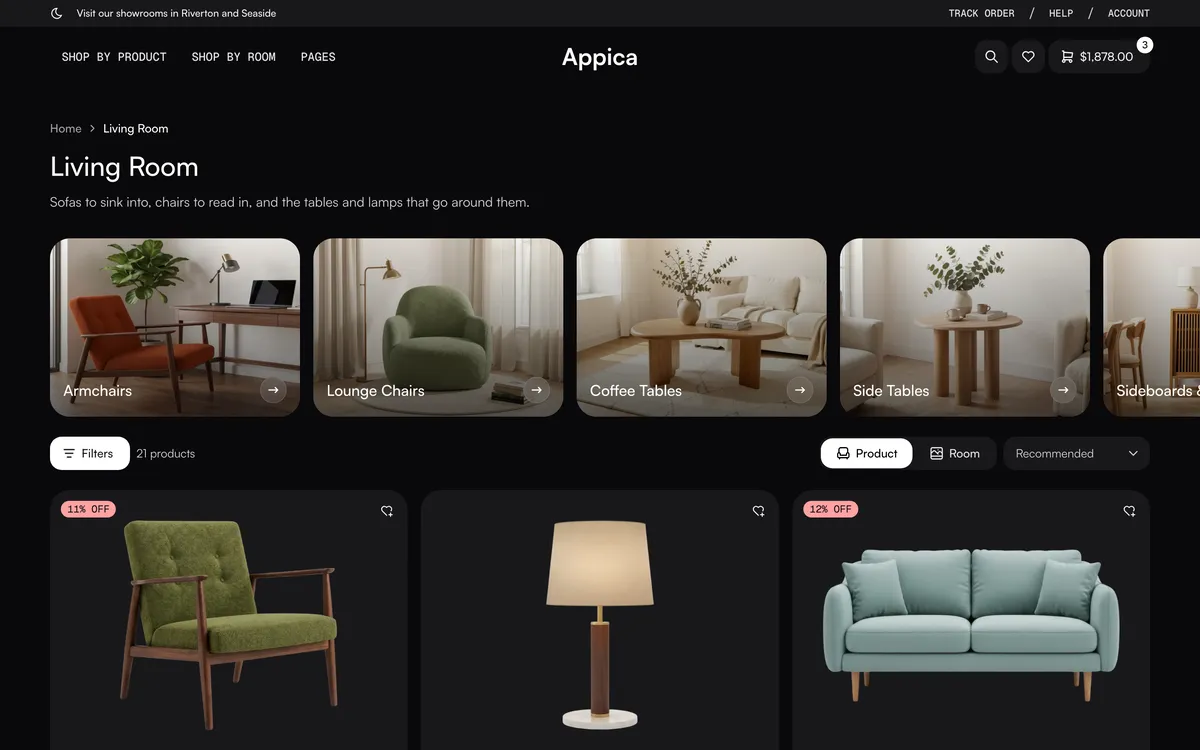
Furniture
Furniture & décor for the Home and Living niche.
- Get notified
More storefronts on the way
New demos ship as free updates to the same template.
Everything a store needs, already wired
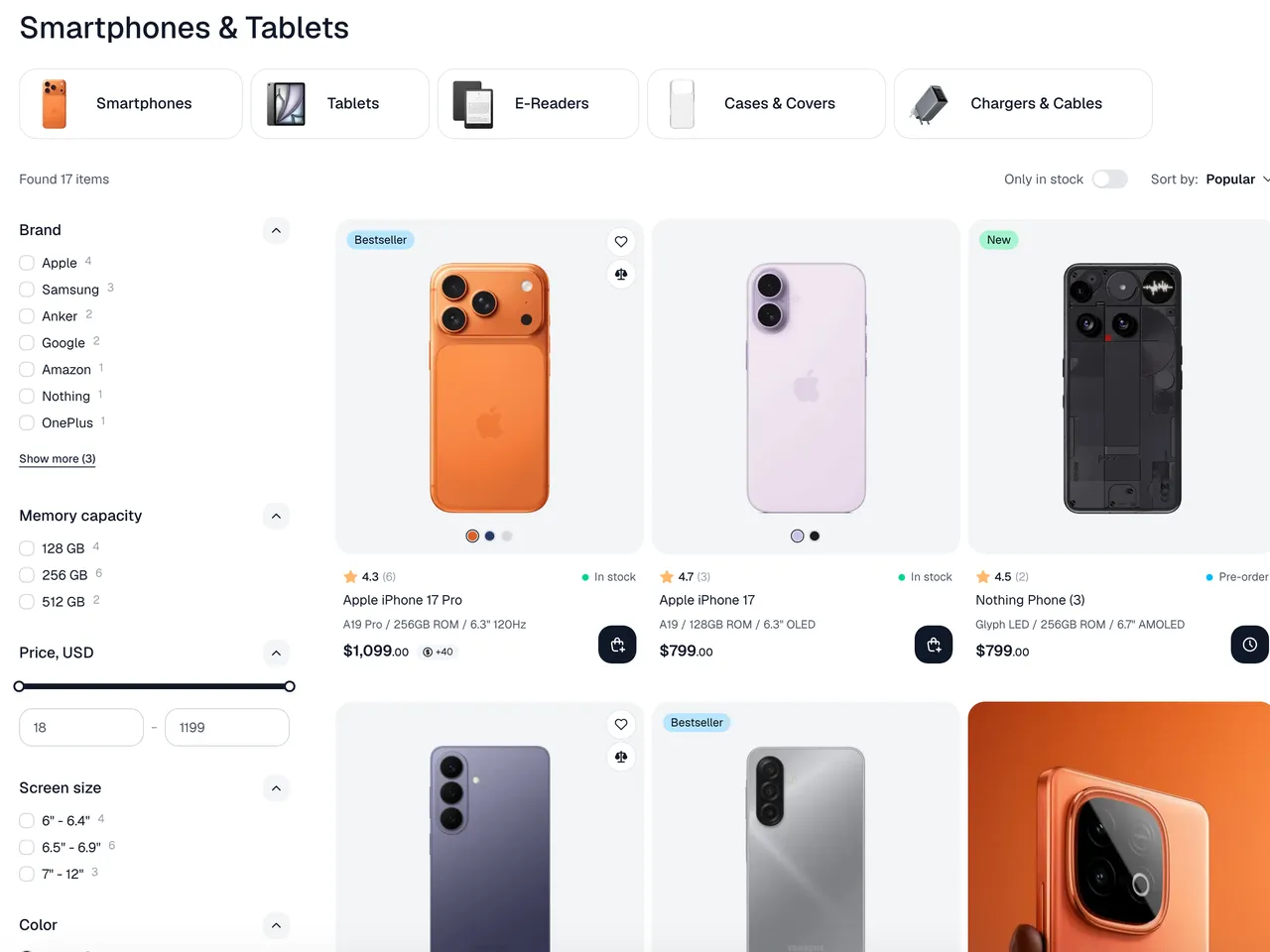
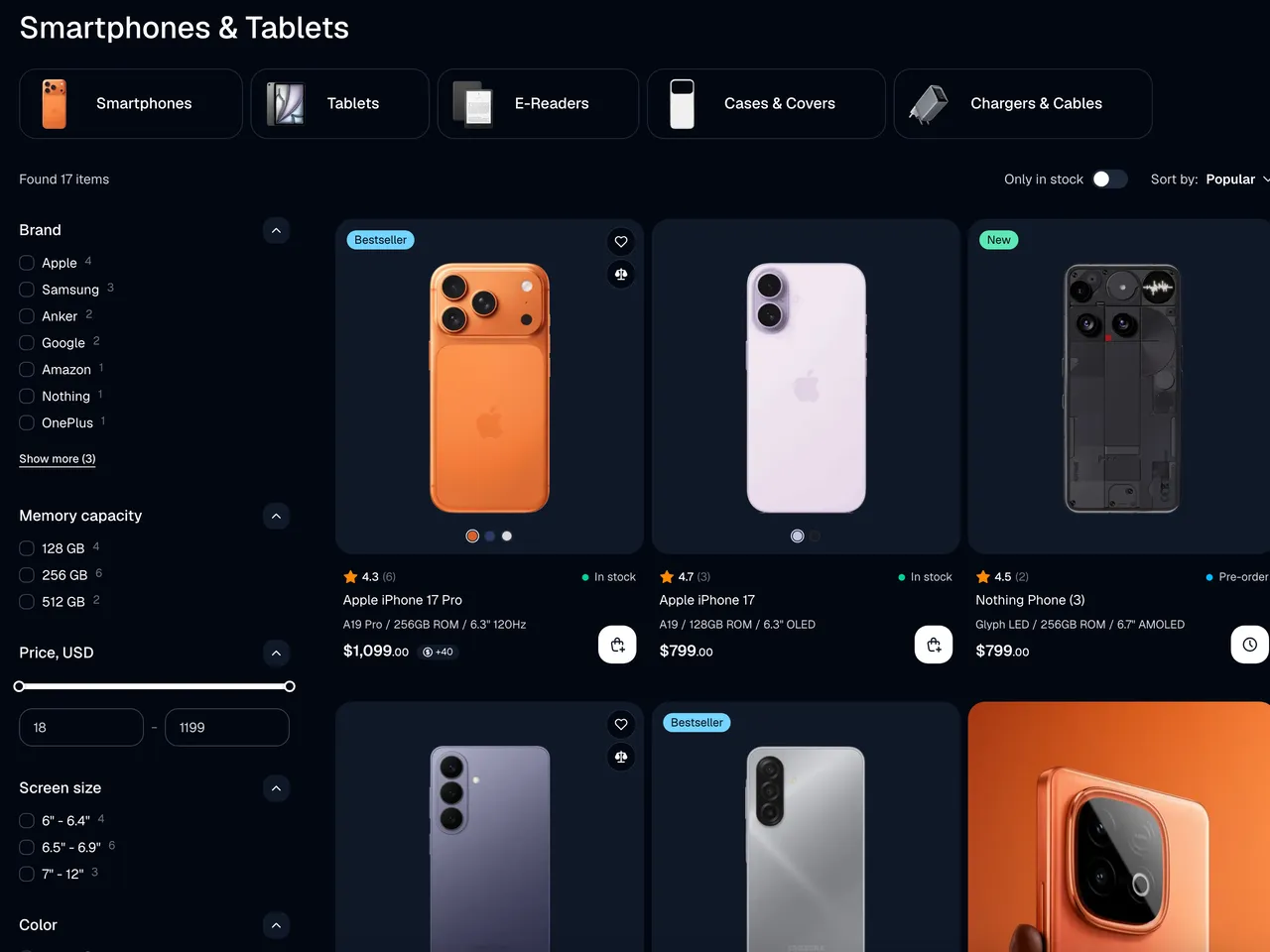
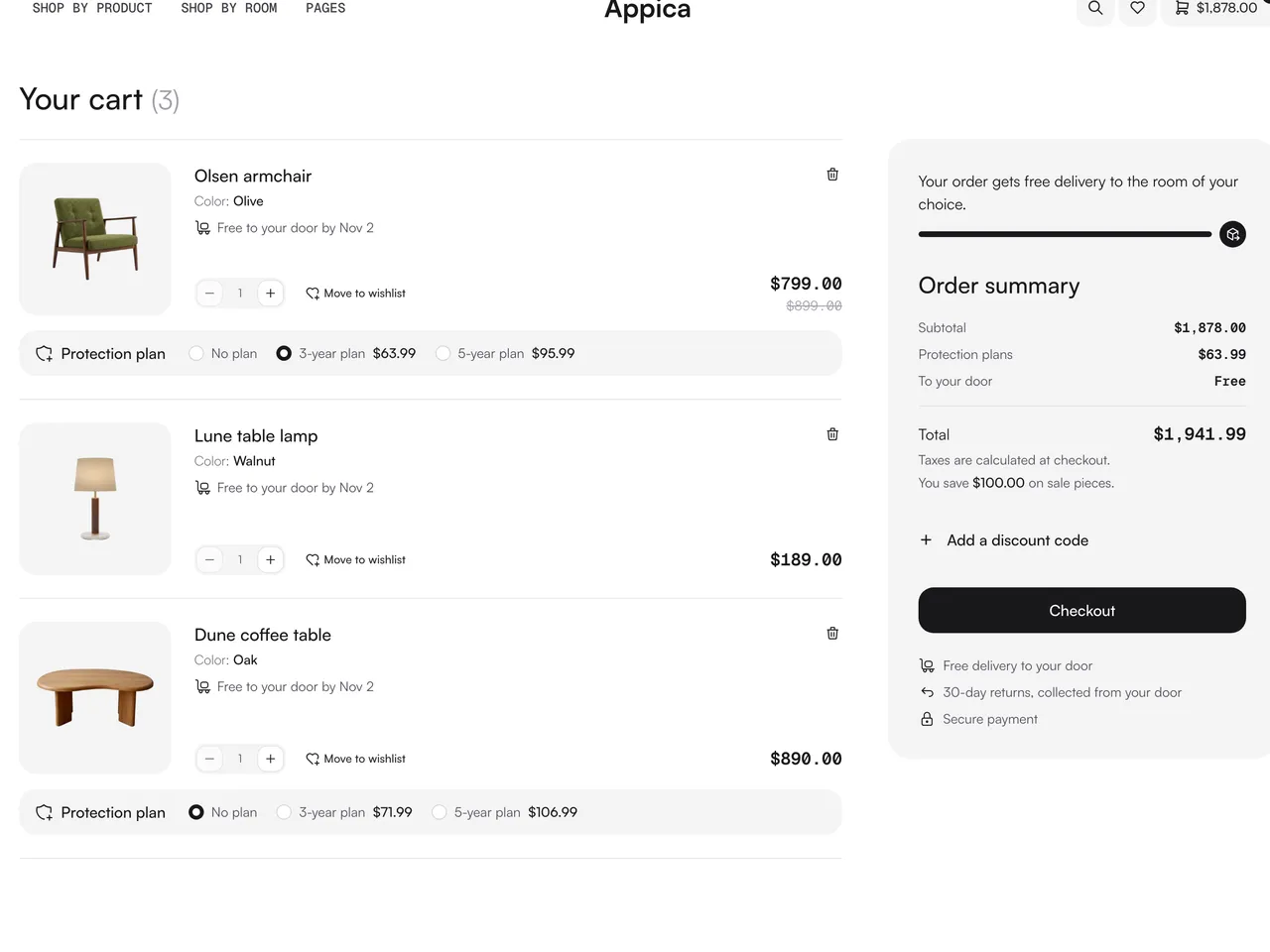
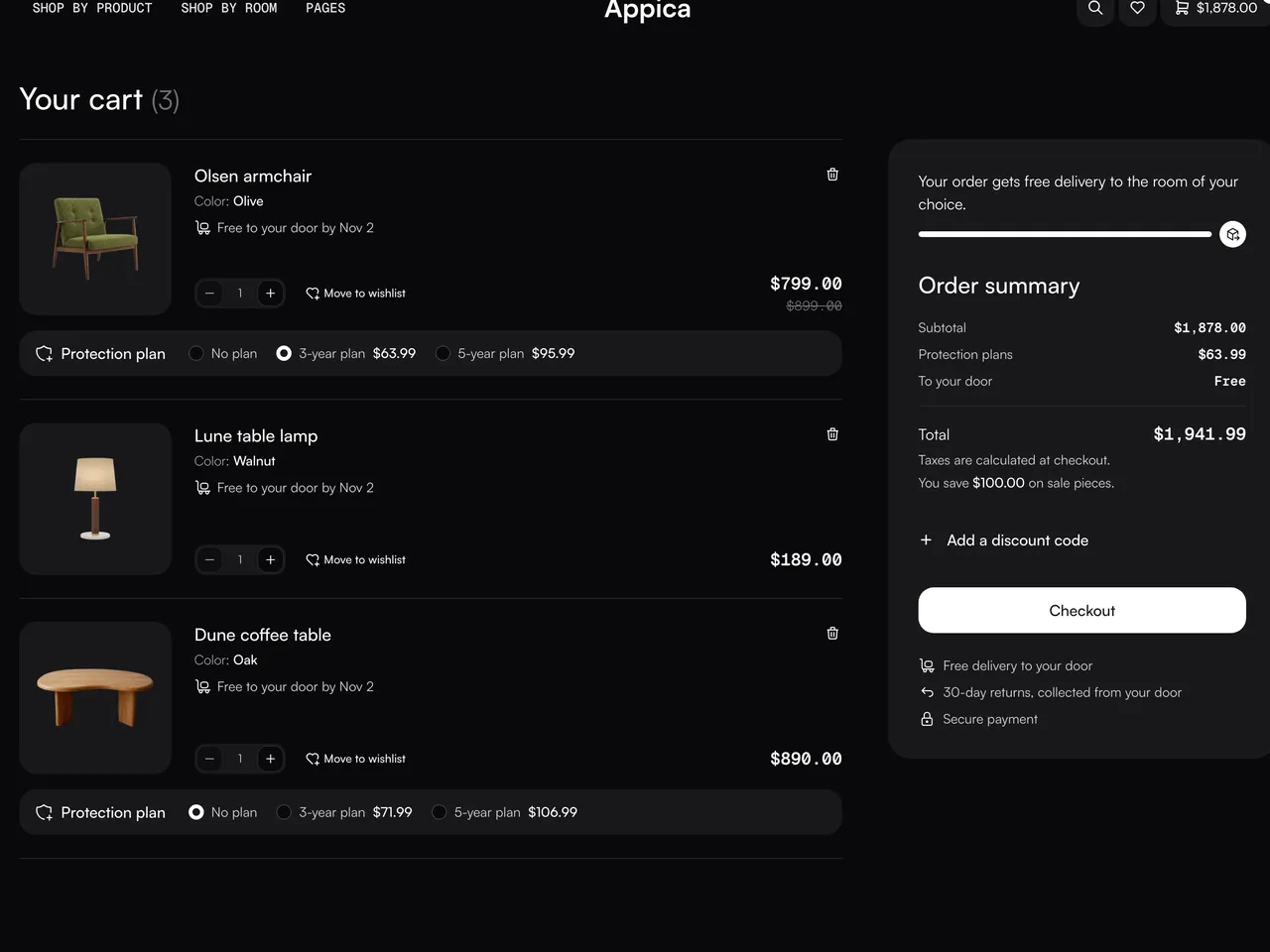
Not mock screens. Each module is an engine shared by all 3 stores, drawn 3 ways, and running on the demo data the moment you clone.
Find and choose
Buy and come back
Also in the box
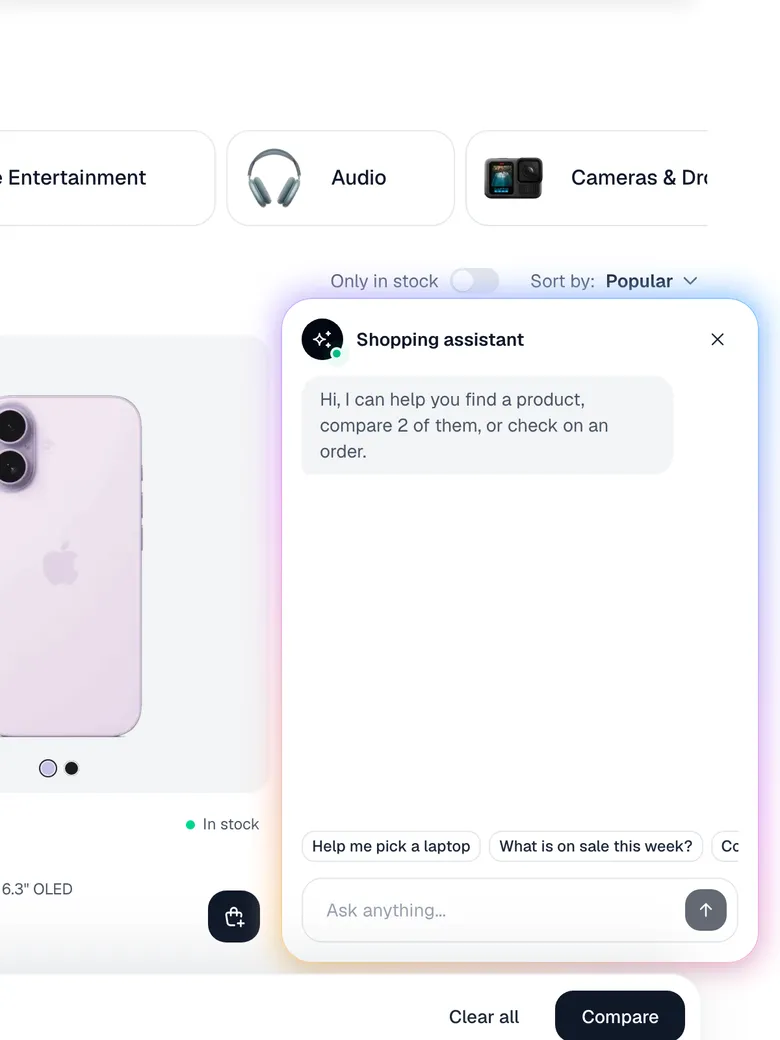
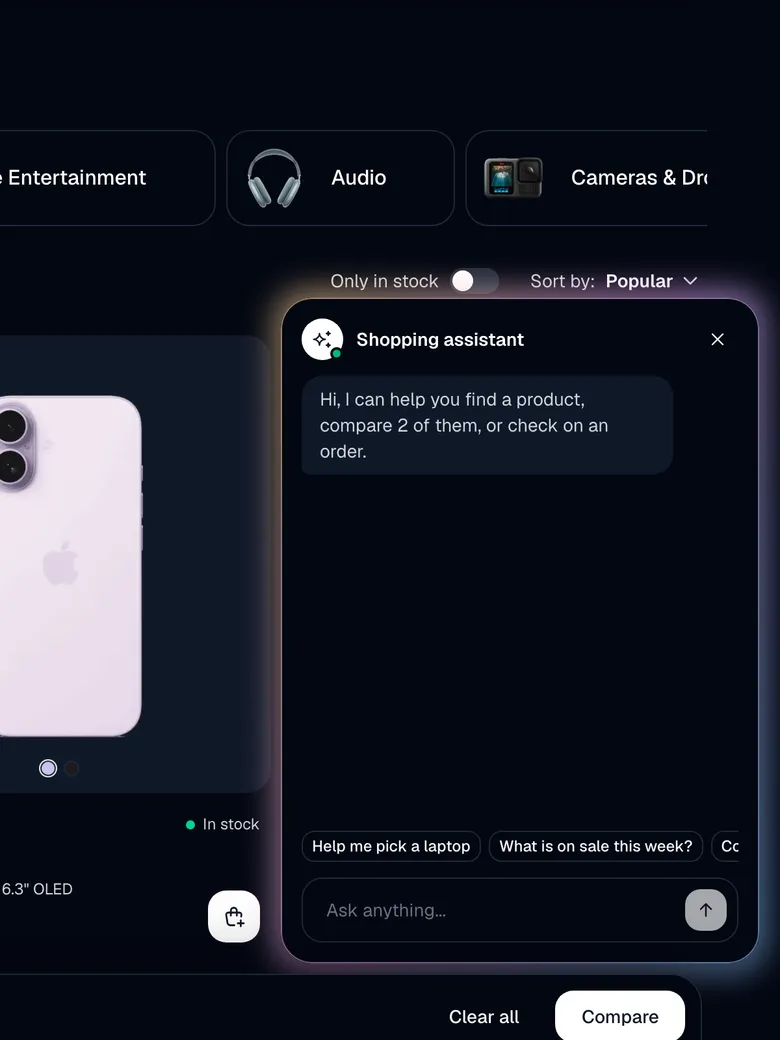
AI surfaces, ready for your model
Every AI feature ships as a finished interface with a demo answer and 1 prop to connect your model. No SDK, no vendor, no lock-in: wire a Server Action and the shopper reads the reply.
The demos answer with sample replies. Nothing calls a model until you connect one.
onAsk to your model or your support stack.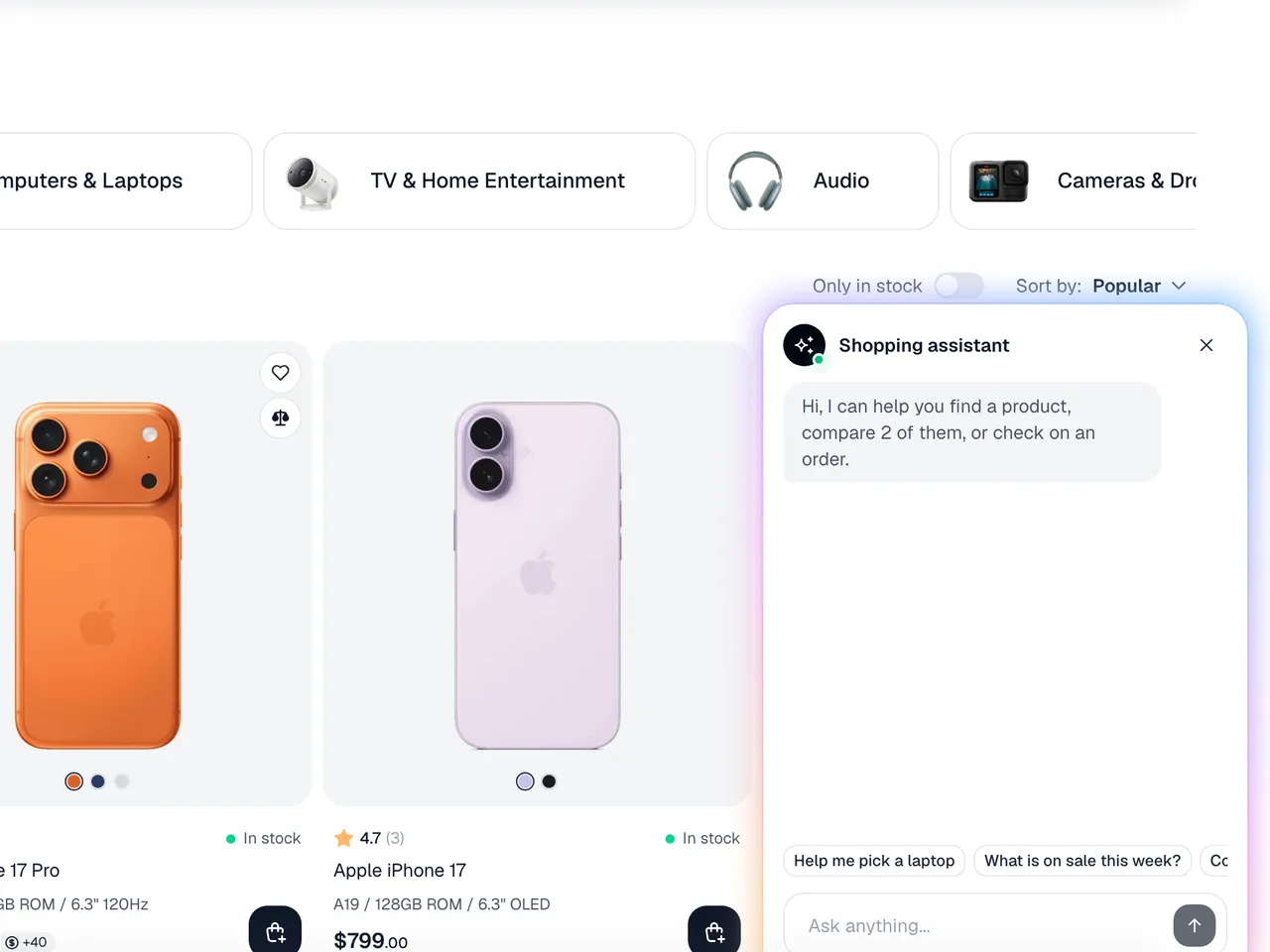
Your backend, behind 1 interface
Screens never call a platform. They call a typed CommerceAdapter: 22 required methods, 22 optional ones that render nothing when missing, and 1 line to bind yours. Blog and auth have seams of their own, so a CMS and a commerce backend swap independently.
- 01Shop the demosEvery page, no backend.
- 02Keep 1 store
pnpm use-demo <demo> - 03Bind your adapter1 line in
config.ts. - 04ShipAnywhere Next.js runs.
src/lib/commerce/config.ts
import 'server-only' import type { CommerceAdapter } from './adapter'import { demoAdapter } from './adapters/demo' /** * The adapter every commerce read and write goes through. Connect your backend * by writing a {@link CommerceAdapter} and putting it here in place of the demo * data; the `commerce-adapter` skill walks through it. * * This module is server-only, so an adapter can read its credentials from * `process.env` and they never reach the client bundle. */export const adapter: CommerceAdapter = demoAdapter /** * Whether the demo data is still the adapter in use. Sample account data that * names its products, such as the demo offers, shows only while it is. */export const isDemoCommerce = adapter === demoAdapter- CommerceAdapter
- 22 required · 22 optional
- ContentAdapter
- 3 methods
- AuthAdapter
- 4 required · 2 optional
Shopify, WooCommerce, Medusa, or your own API: the commerce-adapter skill walks your agent through writing the adapter. Platform adapters are not included.
Built the way you would build it
Modern Next.js, strict TypeScript, and a design system whose source you can read.
Next.js 16 App Router
React Server Components, Server Actions for every write, typed routes, and 1 root layout per store so overlays inherit its theme.
TypeScript end to end
Strict types from the adapter interface to the route props. 37 Server Actions re-validate their input on the server.
Tailwind CSS v4 tokens
Role-based tokens in @theme, no config file, no hex in markup. A store restyles with a few hundred lines of CSS on data-slot hooks.
Appica UI, open source
74 accessible components on Base UI primitives, maintained by the same team, with icons and country flags.
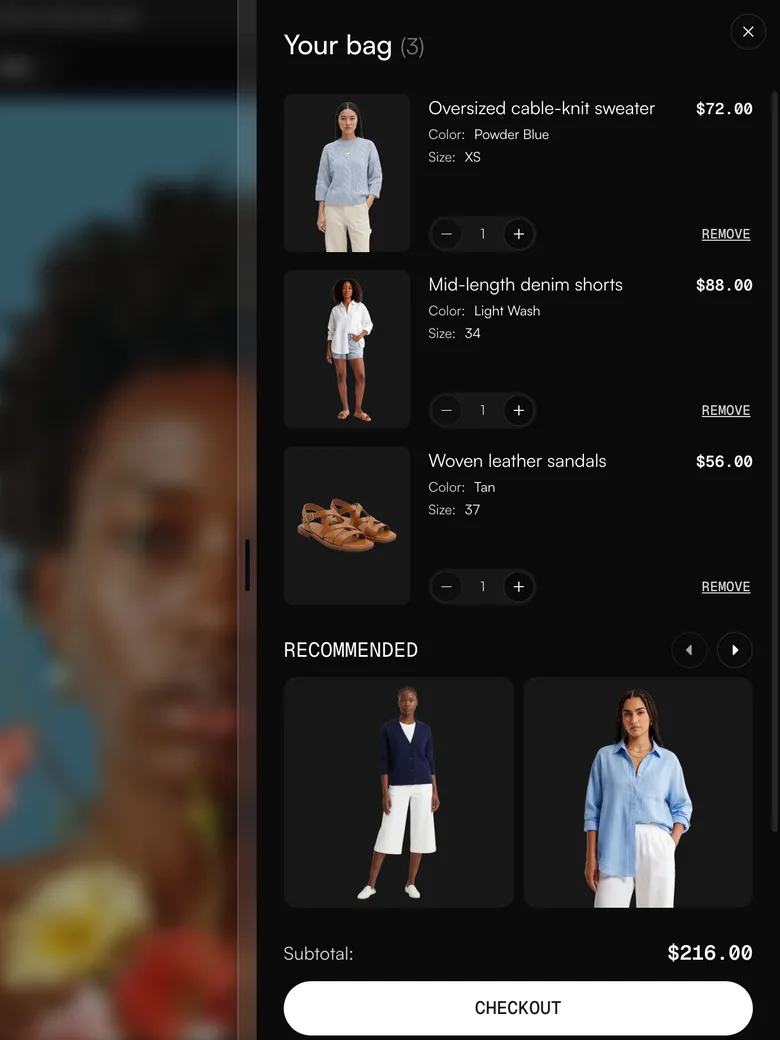
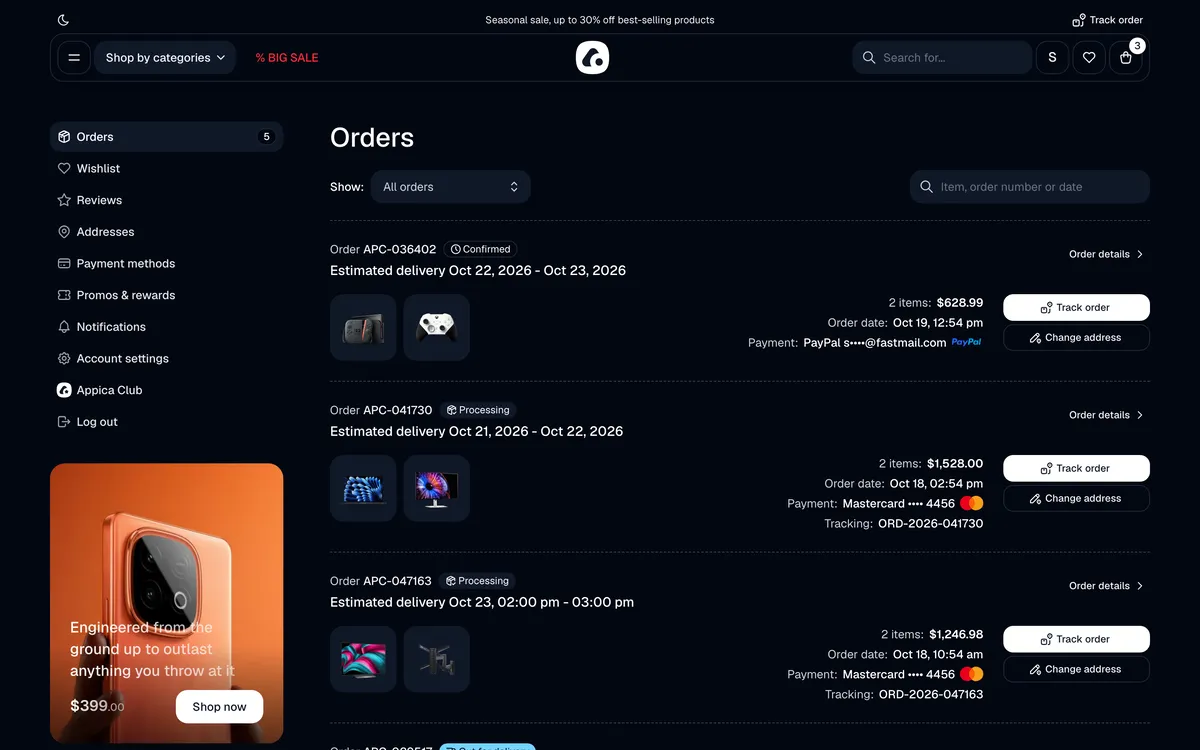
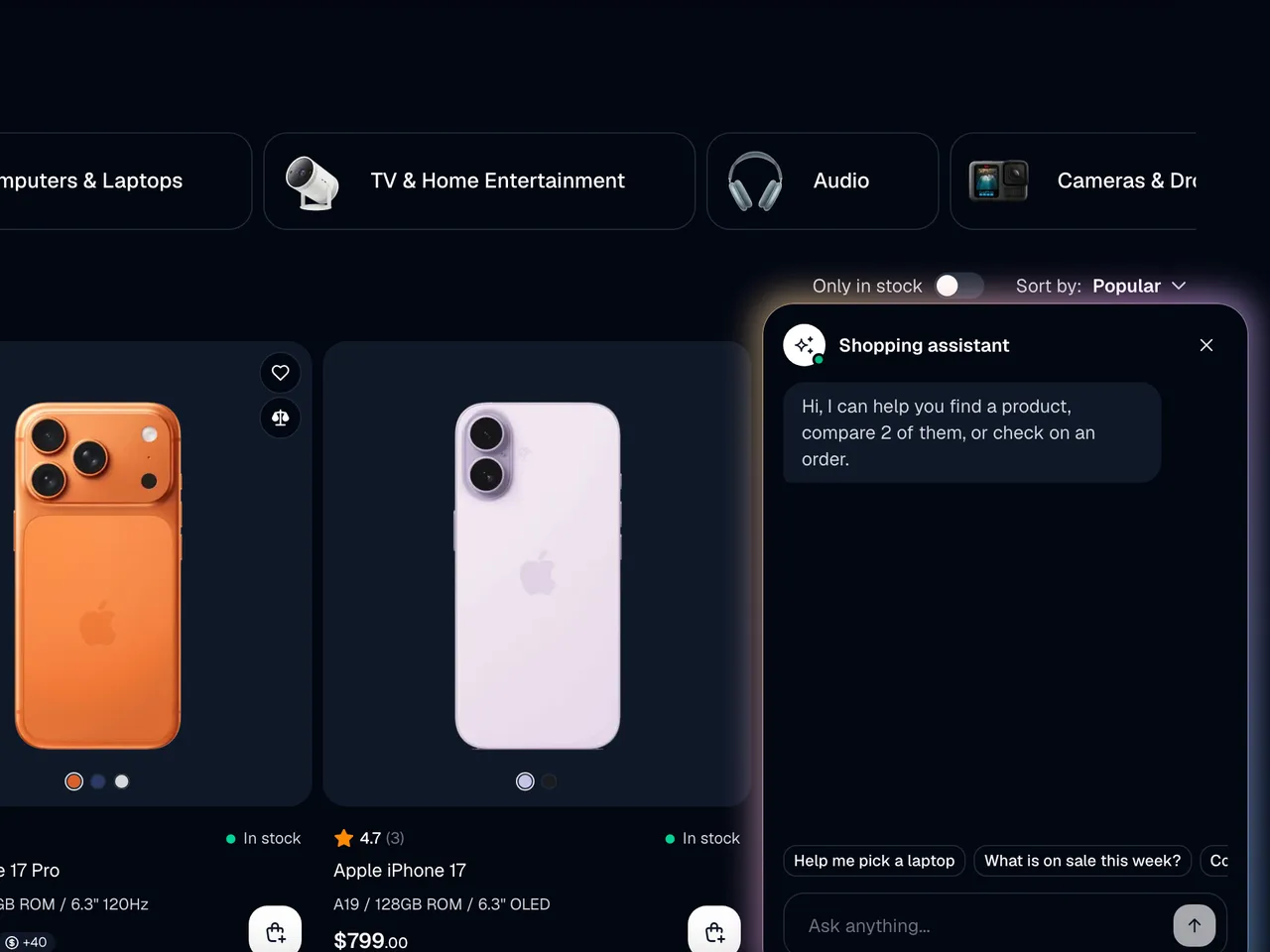
Dark mode and RTL-ready
Every screen in both themes. Logical properties and rtl: variants throughout, with the 2-line switch documented.
Accessible by design
WCAG 2.2 AA as the target: keyboard everywhere, visible focus, 24px targets, and reduced motion honored by every animation.
Ready for your AI agent
AGENTS.md, 17 module guides, and 5 Agent Skills in the open format. Claude Code, Cursor, Codex, and Copilot pick the rules up without being told.
Documented and verified
JSDoc on every exported component, hook, and type, so the API shows on hover. pnpm verify runs ESLint, tsc, and Prettier before anything ships.
- Next.js
- React
- TypeScript
- Tailwind CSS
- Motion
- Base UI
- Vercel
Questions buyers ask
pnpm install and pnpm dev is the whole setup.