Denim, from the loom to the fade
Our straight-leg jeans start as a 33 cm wide strip of indigo cloth on a shuttle loom. How they end up is mostly up to you.
By Rui Teixeira2 min read
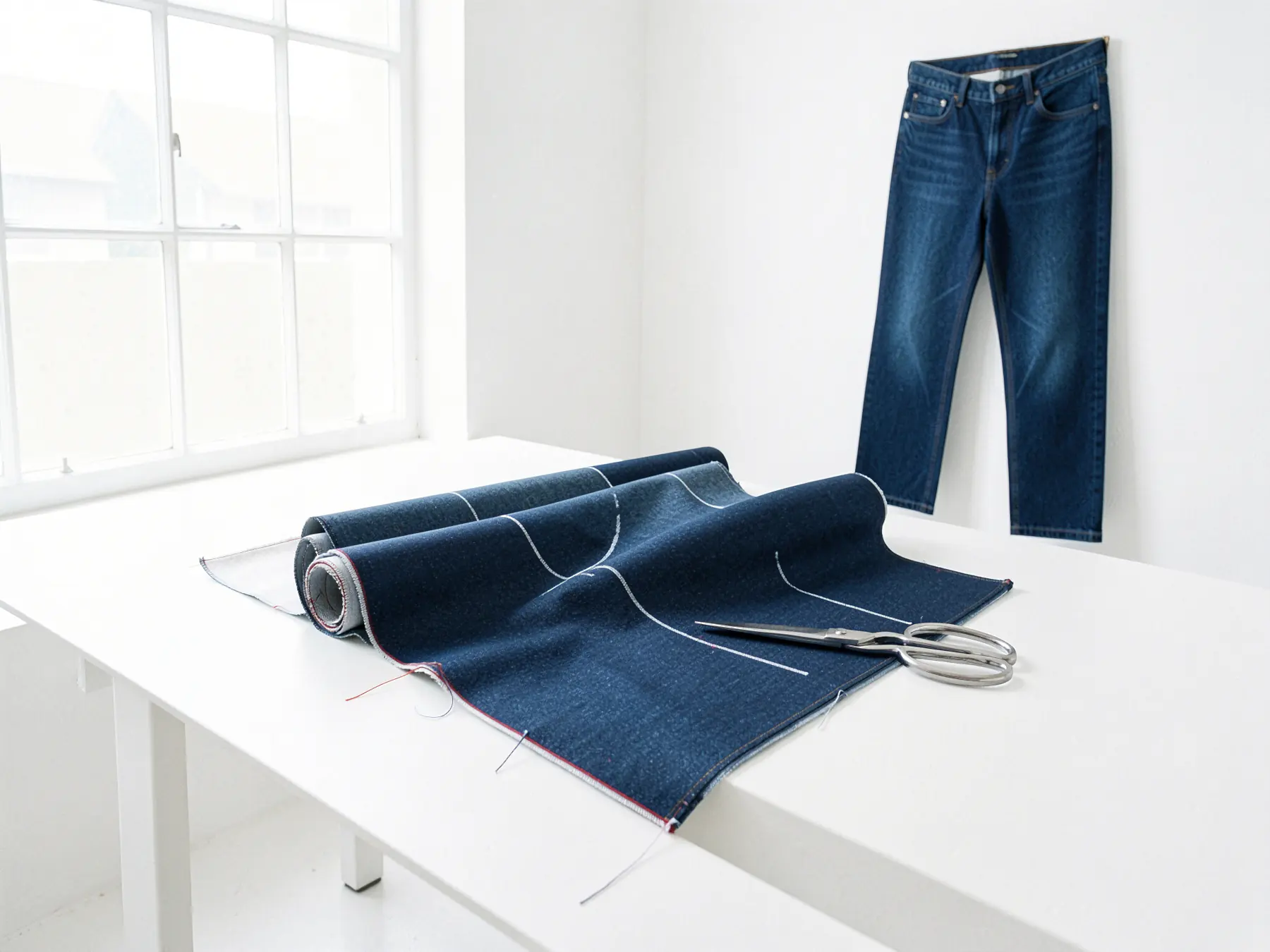
Most denim today is woven on fast, wide looms that turn out cloth 1.5 meters across. Ours comes from shuttle looms, which weave a narrow strip and turn the weft thread back at each edge. That turn makes a clean, finished edge called a selvedge, and you can see it on the outseam when you roll up the hem.
Why the slow loom
Shuttle looms run at a fraction of the speed, and the cloth they make is denser and a little uneven. That unevenness is what gives the fade its character later. The yarn is dyed with indigo in many shallow dips, which colors only its outside and leaves the core white. Every time the cloth is bent or rubbed, a little of the white shows through.
Cutting and sewing
Because the cloth is narrow, each leg is cut so the selvedge runs down the outseam. It uses more cloth than a modern pattern, about 3 meters a pair. The seams are felled, folded over and sewn twice, so they will not fray however often you wash them.
The fade is yours
- Wear them for a few months before the first wash. The creases you make become the fades you keep.
- Wash them inside out, cold, on their own, and hang them to dry.
- Expect some indigo to rub off on pale sofas and white sneakers at first. It stops.
- Bring them in when a knee or a seat wears thin. We patch denim from the inside with the same cloth.
A pair worn every day for a year will look like nobody else’s. That is the only promise denim makes, and it always keeps it.