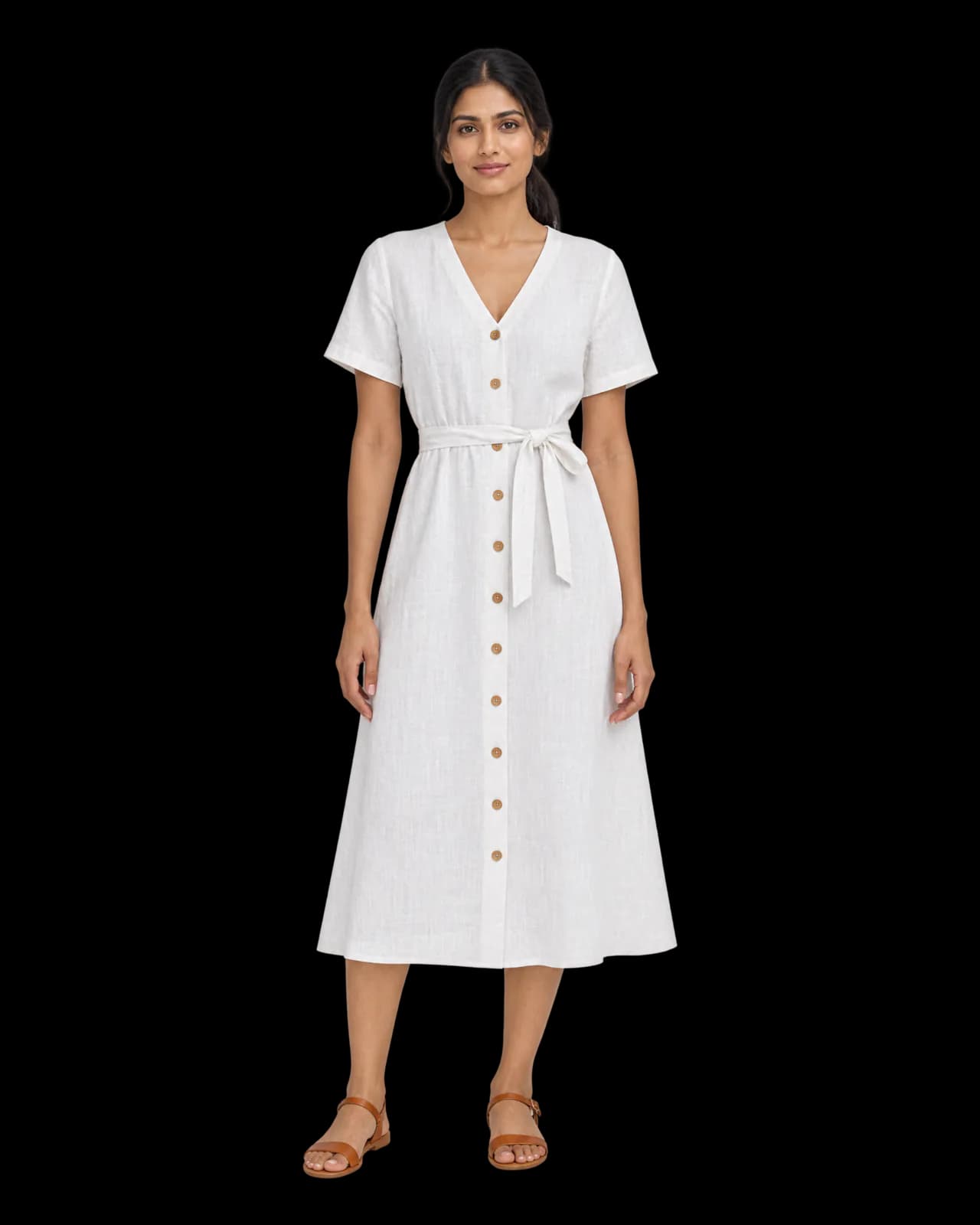
Where our linen comes from
Flax grown in Normandy, retted in the fields, and woven near Guimarães. A plant that needs no irrigation, and a fiber that softens for years.
By Rui Teixeira2 min read
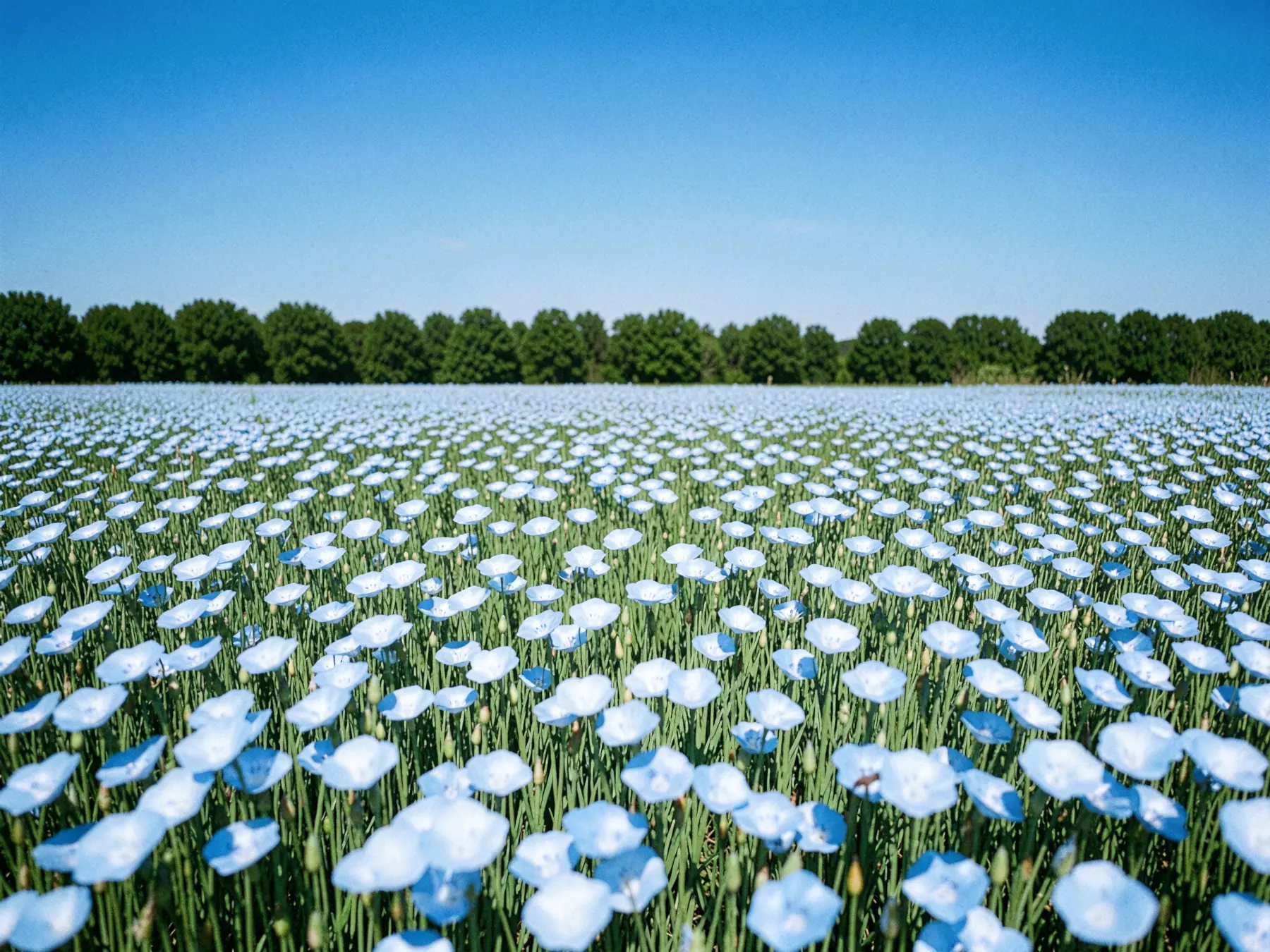
Linen is made from flax, and most of the world’s best flax grows in a strip of coastal land from Normandy to the Netherlands. The climate there suits it: cool, damp, and mild. The plants need no irrigation at all, only rain, which is a large part of why we use so much of it.
From the field
Flax flowers for only a few weeks in June, and each flower lasts a single morning. In July the plants are pulled up by the roots rather than cut, to keep the fibers as long as possible. Then they are left lying in rows in the field for several weeks. Dew and soil bacteria loosen the fibers from the stem. It is called retting, and the farmer’s skill is knowing when to stop it.
To the mill
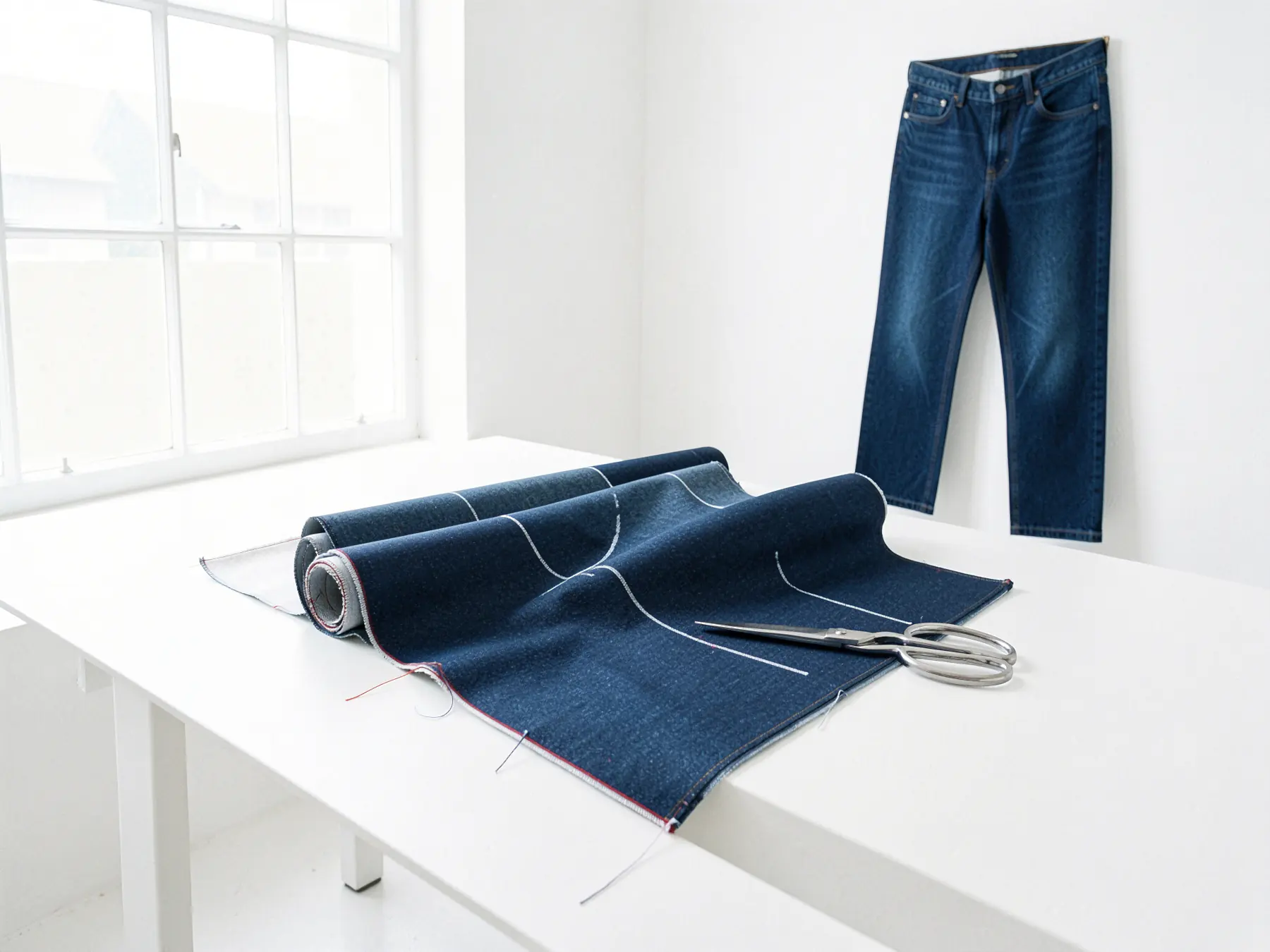
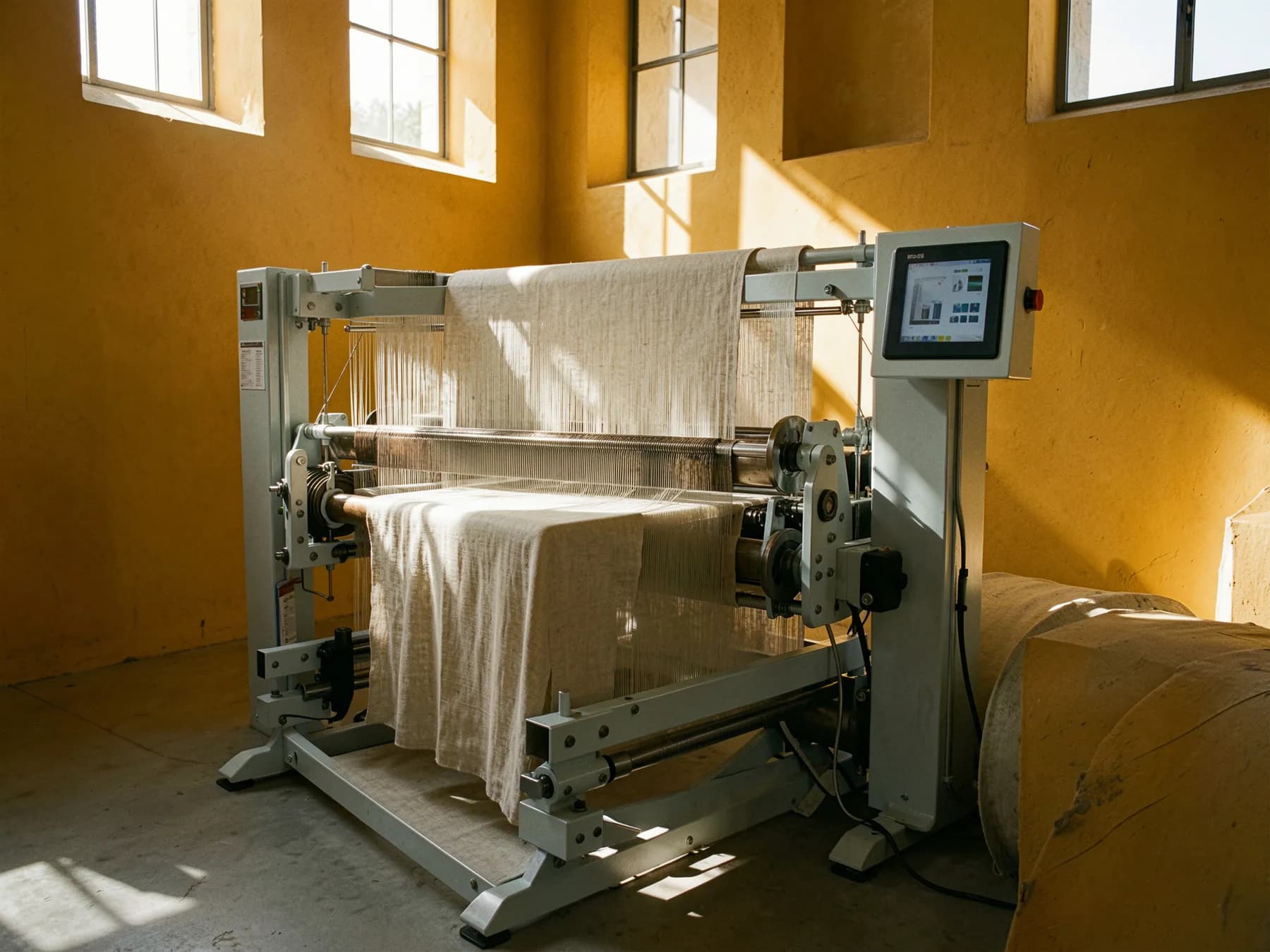
The dried stems are crushed and combed to free the long fibers, which are spun into yarn. Our yarn is woven at a family mill near Guimarães, about an hour from our Porto atelier, on looms set a little slower than most so the cloth comes out dense and even.
And then for years
New linen is crisp. Every wash breaks it in a little more, and a linen shirt is at its best somewhere around its second summer. It is also one of the strongest natural fibers there is, stronger wet than dry, which is why linen sheets get handed down. Wash it at 40 °C, hang it to dry, and do not bother ironing it.