Suede after the first rain
Water does not ruin suede. Heat does, and so does brushing it wet. What to do on the evening of the first downpour.
By Nora Vang2 min read
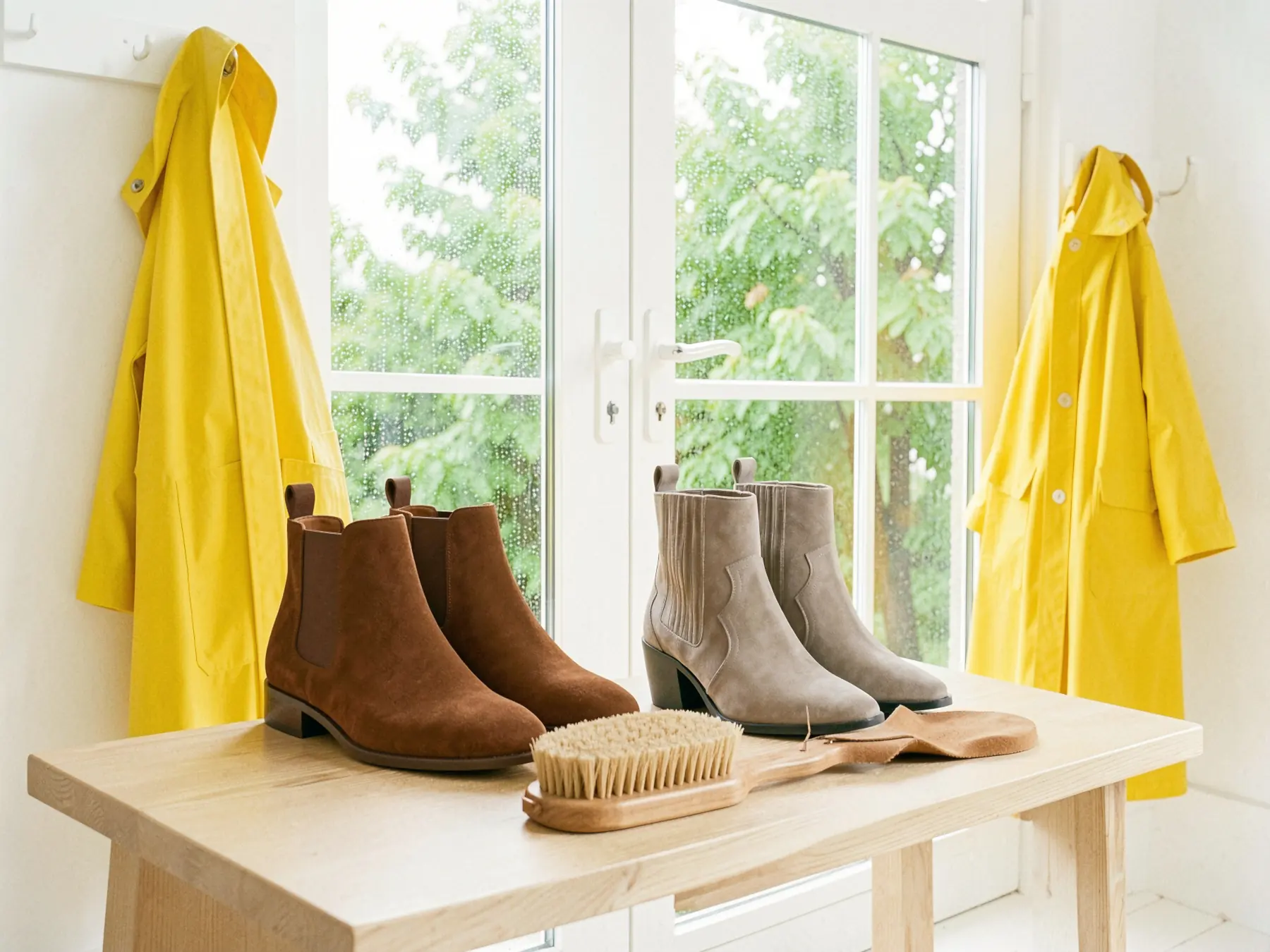
Suede is leather with its surface buffed into a soft nap. It marks easily and it darkens when it gets wet, which is why people treat it as a fair-weather material. It is tougher than it looks. Most suede that comes to us damaged was not rained on. It was dried on a radiator.
Before you wear it
Spray new suede with a protector made for it, in 2 light coats from about 20 cm, and let it dry overnight. Repeat every few months. It will not make suede waterproof, but water will bead and roll off instead of soaking in.
When it gets wet
- Blot off standing water with a dry cloth. Do not rub.
- Stuff shoes and boots with plain paper to hold their shape and draw out moisture.
- Leave them to dry at room temperature, away from radiators, fires, and hair dryers. Heat makes suede stiff and brittle.
- Once fully dry, brush the nap back up with a suede brush, moving in one direction.
Marks and salt
A dry mark usually lifts with a suede eraser, rubbed gently, then a brush. Winter salt leaves white tide lines: dab them with a cloth barely dampened with water and a little white vinegar, let it dry, and brush. Work on the whole panel rather than the stain alone, so it dries to an even color.
Suede darkens and softens with age, and that is part of the point. Shoes that look a little lived in after a year are doing what suede does. If a seam opens or a sole wears through, the repairs counter will see to it.